Key Takeaways
- “SMS gateway CodeCanyon” usually means a self-hosted admin panel + Android APK you install yourself — not free carrier SMS and not a managed control plane.
- The listing price is only the license. You still pay hosting, your time, OEM phone ops, and operator airtime on every send.
- Before you buy, verify demo OTP latency, DLR/webhooks, multi-device behavior, license domain rules, and whether author support includes installation (often it does not).
- Demand a documented HTTPS send + status shape you can wrap behind your own client interface so you are not married to one vendor’s UI forever.
- A maintained SaaS Android gateway still uses your phone and operator credit; you pay for devices + SMS volume so you are not on-call for panel upgrades.
SMS Gateway at sms-gateway.app is not a CodeCanyon listing and is not that marketplace ZIP. This page is a buyer checklist for third-party scripts — then a honest compare to a maintained Android control plane.
Search sms gateway codecanyon and you land in a familiar Envato aisle: polished screenshots, SaaS-ready buzzwords, Android phone demos, and a one-time price that feels cheaper than Twilio. Some of those listings are serious products. Some are aging PHP panels with a marketing page that outran the changelog. This guide is for buyers who want a clear pre-purchase filter — not a fan letter to any single author. Priced by devices and SMS send volume. You use your own phone and operator SMS credit.
Related context if you are still mapping the category: open-source Android SMS gateway options, the Android SMS gateway server ops guide, and the Android SMS gateway API patterns article. Product paths on this site live under download the Android gateway app and device and SMS volume pricing.
What “SMS gateway CodeCanyon” usually means
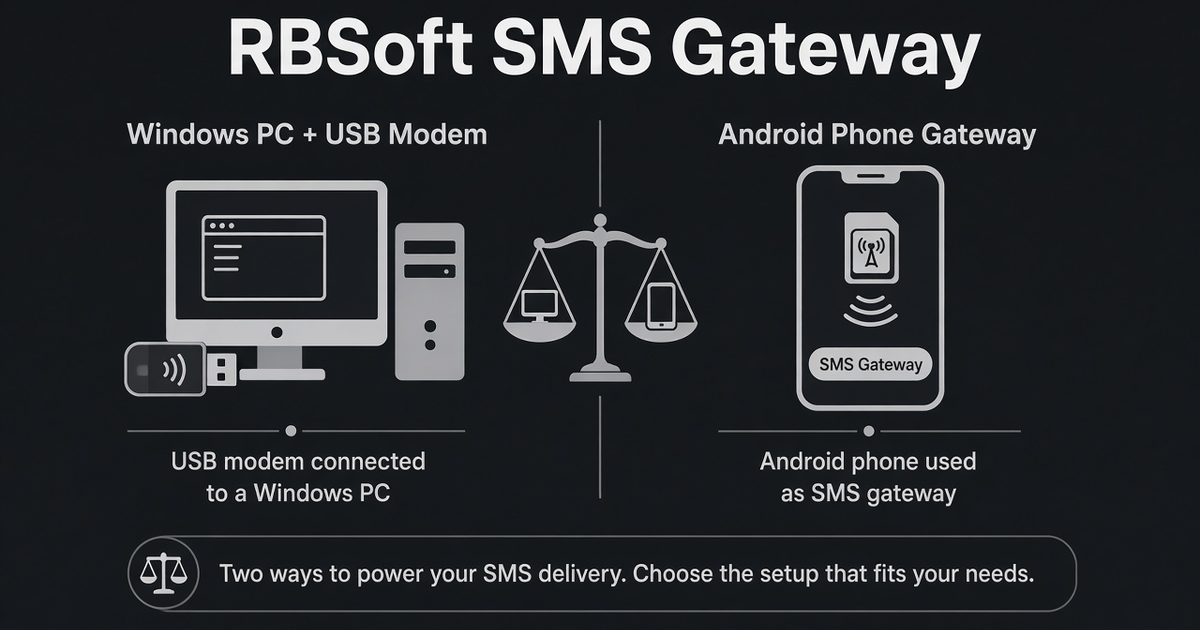
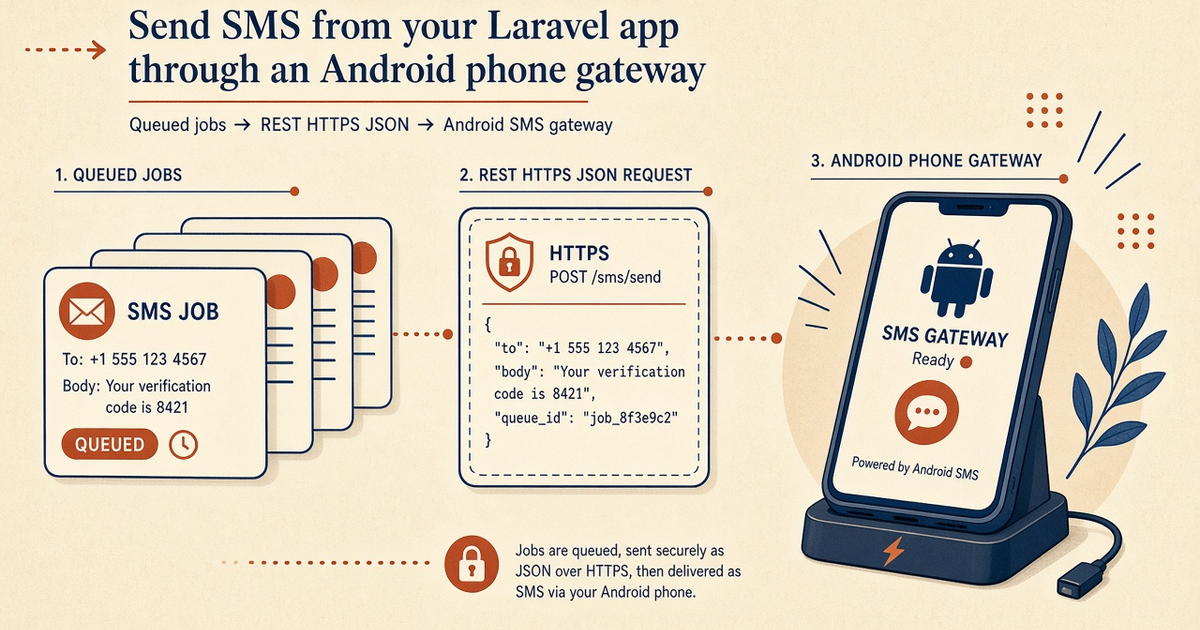
On marketplaces, “SMS gateway” almost always means a self-hosted control plane plus an Android client that uses the phone’s modem. You buy a license zip. You install an admin panel on your VPS or cPanel host. You sideload an APK because Google’s SMS permission policy pushed many of these apps off Play Store distribution years ago. Then you point your app or CRM at whatever HTTP API the panel exposes.
That architecture is the same family as other Android SIM gateways: the SIM and operator plan carry the message; software only orchestrates. Marketplace copy sometimes blurs that line with phrases like “unlimited SMS after install.” Translate carefully. Unlimited usually means the script stops metering you — not that your carrier stopped billing you.
You will also see white-label SaaS claims: sell accounts to your clients, Stripe/PayPal plugins, contact lists, templates, webhooks. Those features matter if you are building an agency product. They are irrelevant if you only need reliable OTP for one product. Buy for the job you actually have.
Why people search CodeCanyon first
Three honest motives show up again and again. First, sticker price: a few dozen dollars feels safer than a monthly SaaS bill when you are still unsure SMS will matter. Second, ownership: founders want the PHP source on their disk so a vendor cannot “turn them off.” Third, white-label dreams: resell SMS to local businesses and keep the margin.
All three motives can be valid. They also hide costs. Ownership means you own CVEs, PHP major upgrades, license domain resets, and APK rebuilds when Android OEM battery rules change. White-label means you become the support desk for other people’s phones. Low sticker price means nothing if two engineer-days of install and hardening burn more cash than a year of a small maintained plan.
If your real intent is “send OTP without babysitting a panel,” start by reading how a maintained Android path prices devices and volume on device and SMS volume pricing— paid plans start from $19/month — then decide whether marketplace ownership still wins.
License math vs total cost of ownership
Marketplace regular licenses typically cover one end product or one domain/server, with future updates included and a limited support window. Exact rules live on Envato’s license pages and the author’s item notes — read both. Common gotchas:
- One license for one production domain; staging may need a second license or a temporary reset ticket.
- Moving hosts can require deactivating the old install before the new one activates.
- Support windows expire; extending support is a separate fee and still usually excludes custom work.
- “Source included” does not mean you may redistribute a competing SaaS built from that source — check the license text.
Total cost of ownership for a year looks more like: license + support extension + VPS + SSL + backup tooling + engineer hours for install and upgrades + spare Android handsets + operator SMS bundles. Write those lines in a spreadsheet before the cart. If the spreadsheet only has “item price,” you are not done evaluating.
Pre-purchase checklist (before you pay)
Use this list as a hard gate. If more than two items fail, walk away or switch to a maintained gateway path.
- Last update date: Prefer listings with recent changelog entries for current PHP and Android versions — not only a 2019 marketing refresh.
- Demo proves radio path: You can send to your own number and see a believable status trail.
- API documentation exists: Send, status/DLR, and inbound webhook shapes are written down, not only implied by UI.
- Hosting requirements are explicit: PHP version, extensions, cron, queue workers, HTTPS.
- APK update path is clear: How do you get new builds after Play Store SMS policy changes?
- Multi-device story: Can you add a second phone for failover, or is everything single-handset?
- Support exclusions: Installation and customization often excluded — plan for that.
- Security posture: Default admin passwords, CSRF, rate limits, and where API keys live.
Feature checkboxes for bulk CSV sends, two-way SMS, or USSD only matter after the checklist above passes. Fancy modules on a brittle core are still brittle.
How to pressure-test the live demo
Marketplace demos are marketing environments. Treat them like a hostile interview. Bring your own phone number. Send one short OTP-style message and one slightly longer transactional message. Note wall-clock time from click to handset vibrate. Check whether status moves from pending to something terminal. If inbound SMS is advertised, reply from your phone and confirm the panel shows the body.
Then break things gently. Send while the demo device might be sleeping. Try a second rapid send. Look for rate limit errors that are honest instead of silent drops. Screenshot everything. Authors who cannot explain demo failures in comments or support preview will not magically become clearer after you pay.
Also check the demo’s business model claims. If the panel sells “SMS credits” to end users, ask yourself whether those credits are script meters or real aggregator traffic. For Android SIM gateways, real traffic always bottoms out in operator plans on phones you (or your tenants) control.
Support windows and what they exclude
Envato item support commonly covers answering questions about features, helping with bugs, and clarifying included third-party assets. It commonly excludes installation services and customization. That split surprises first-time buyers who expected “$79 and they set it up for me.”
Plan staffing accordingly. Either your team can follow the install docs on a clean VPS, or you budget a separate paid install from the author or a freelancer who has done that specific item before. Neither option is free just because the zip downloaded cleanly.
When support expires, you still keep the files under license terms, but you lose the author’s ticket queue. That is fine if the product is stable and your team can read PHP. It is painful if you depended on the author for every Android 14 quirk. Ask in pre-sale: how are APK updates delivered two years later?
Hosting, PHP, and Android APK realities
Most CodeCanyon SMS gateways want a conventional LAMP/LEMP stack: recent PHP, common extensions, writable storage, cron, and preferably a queue worker for outbound jobs. Shared hosting can work for light tests and fail under concurrent OTP. Prefer a small VPS you control so you can set memory limits, restart workers, and keep TLS certificates current.
On the phone side, expect sideloaded APKs, SMS and phone permissions, battery optimization exceptions, and a dedicated handset that is not also someone’s daily Instagram device. Marketplace docs that skip OEM battery settings are incomplete for production. The same physics apply to any Android gateway — including maintained SaaS apps — because the radio lives on the handset.
For a deeper handset ops view, see Android SMS gateway app and android phone as SMS gateway. Those habits transfer whether your panel came from a marketplace or a SaaS dashboard.
API integration sample you should demand
Before purchase, you should be able to sketch a backend client. If the listing cannot show send + status shapes, you are buying a UI, not an integration surface. Here is the kind of thin wrapper you want to own in your code — adapted to whatever paths the vendor documents:
// Pseudocode — map to the vendor’s real paths after you read their docs
interface MarketplaceSmsClient {
 send(input: { to: string; body: string; ref: string }): Promise<{ id: string; status: string }>;
 getStatus(id: string): Promise<{ status: string; detail?: string }>;
}

async function sendOtp(client: MarketplaceSmsClient, phone: string, code: string, challengeId: string) {
 const result = await client.send({
 to: phone,
 body: `Your code is ${code}. It expires in 5 minutes.`,
 ref: challengeId, // stable id so retries do not create duplicate challenges
  });
  // Persist result.id next to challengeId; poll or wait for webhook before trusting login
 return result;
}
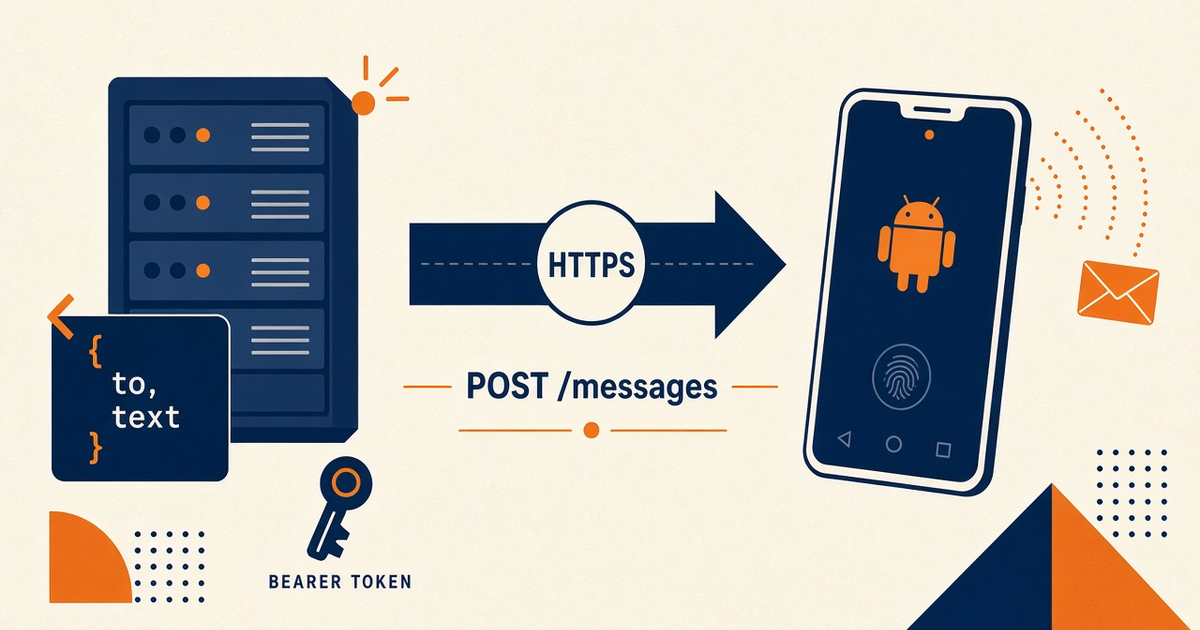
A minimal HTTP sketch many buyers expect to see documented (values are illustrative):
# Example shape only — replace with the listing’s documented endpoint
curl -sS -X POST 'https://your-panel.example/api/send' \
  -H 'Authorization: Bearer YOUR_API_TOKEN' \
  -H 'Content-Type: application/json' \
  -d '{"to":"15551234567","message":"Your code is 481920","reference":"ch_9f2a"}'

# Then either poll status or receive a webhook:
# { "id":"msg_123", "status":"delivered", "reference":"ch_9f2a" }
Keep secrets on the server. Never embed marketplace API tokens in a mobile app or WordPress theme file committed to a public repo. Prefer environment variables and rotate tokens after staff changes. For patterns that survive retries, the SMS API documentation on this site shows how a maintained gateway documents send and DLR — use that as a quality bar when judging marketplace docs, even if paths differ.
OTP vs bulk: marketplace fit questions
OTP traffic cares about latency, failover, and clear failure states. Bulk traffic cares about list hygiene, throttling, quiet hours, and carrier filtering. A marketplace panel that shines at contact CSV import may still be weak at multi-device OTP routing. Ask which job is primary.
For OTP: can you pin a message to a device, read delivery failures fast, and fail over? For bulk: can you pace sends, pause a campaign, and handle STOP replies? Feature pages on this site for bulk SMS from Excel and CSV and two-way SMS describe the behaviors you should map against any listing — not as a feature checklist to copy blindly, but as a reminder of what production messaging actually needs.
Also respect local rules. Marketplace software does not grant you permission to spam. Consent, sender identity, and content rules still apply when the modem is yours.
Security review before production traffic
Self-hosted panels are attractive targets because they hold API tokens, user PII in contact lists, and sometimes payment settings for reseller SaaS. Before you point real customers at a fresh install:
- Change every default admin password and disable demo accounts.
- Force HTTPS; redirect HTTP; keep certificates auto-renewed.
- Restrict admin paths by IP or VPN if your team is small.
- Confirm password reset and invite flows cannot be abused for account takeover.
- Check file upload endpoints if the panel accepts CSV or media — malware and path traversal show up here.
- Review how webhook URLs are stored; SSRF into cloud metadata endpoints is a classic footgun.
- Turn on server backups and test a restore once before go-live.
If that list already feels heavier than your team’s appetite, that is useful signal. Security debt is part of “owning the source.”
WordPress and plugin-side glue
Many buyers want WooCommerce order SMS or form plugins talking to the gateway. That is fine when the WordPress side is a thin client: store the API token in wp-config or a secrets plugin, call HTTPS from the server, and keep message templates editable without redeploys. It goes wrong when tokens sit in the database in plaintext visible to every shop manager role, or when outbound calls happen on every page view instead of on order state changes.
For plugin architecture hygiene, the official WordPress plugin handbook is a solid external reference on structure, capability checks, and data validation. Use it even if your SMS panel is not a WordPress plugin — the same discipline applies to any PHP glue you write around a marketplace API.
Marketplace script vs maintained SaaS gateway
Both paths can drive an Android phone you own. The difference is who operates the control plane.
| Dimension | CodeCanyon-style script | Maintained SaaS Android gateway |
|---|---|---|
| Upfront cost | License + your install time | Often free tier to prove; then devices + volume |
| Who patches the panel | You (and maybe the author during support) | Vendor operates the control plane |
| Carrier SMS cost | Your operator plan | Your operator plan |
| White-label reseller SaaS | Often a primary selling point | Usually you integrate as one product team |
| Best when | You want full panel ownership and can staff ops | You want OTP/uptime without owning PHP |
SMS Gateway on this site is the maintained path: download the Android app, pair devices, call HTTPS APIs, and pay by device count and SMS send volume. Operator airtime stays yours. The free tier includes 300 SMS lifetime for functional testing. That model exists so buyers who do not want to run a marketplace panel still have a production option — not so every CodeCanyon listing is “wrong.”
How to evaluate a listing in one afternoon
Block three hours. Hour one: write constraints and open two or three shortlisted demos with a stopwatch. Hour two: read license, support policy, changelog, and hosting requirements; paste API samples into a scratch file. Hour three: estimate staff hours for ninety days of ops and compare to a maintained gateway trial on one phone.
End the afternoon with a written decision: buy listing X, buy nothing yet, or trial the SaaS path. Decisions that stay as Slack vibes tend to become surprise invoices later.
Red flags that should stop the purchase
- No live demo, or demo cannot send to your number.
- Changelog silent for years while marketing still says “latest Android.”
- Support comments full of unanswered install failures.
- API documented only as “see video” with no request/response examples.
- Claims of free SMS to any country without explaining operator SIMs.
- Pressure to buy extended licenses before you have proven OTP on one device.
- Lax security: default passwords left in screenshots, debug mode on in demo.
Any two red flags together are enough. Marketplace refund policies vary; prevention beats arguing after the fact.
Day-one ops if you still buy the script
If the checklist passed and you purchase, run a boring go-live:
- Fresh VPS, SSH keys only, firewall limited to 80/443 and your admin IP.
- Install per docs; disable directory listing; force HTTPS.
- Create a non-demo admin; store API tokens in env; rotate the first token after smoke tests.
- Dedicated Android phone on charge, Wi-Fi with static DHCP reservation, battery optimizations off.
- Send 20 OTP-shaped messages across two hours; confirm DLR or webhook truthfulness.
- Document reboot recovery in a one-page runbook next to the server notes.
- Schedule a calendar reminder before support expiry if you might extend.
Only then connect production auth or USSD workflows. Fancy modules after a stable send path — never before.
Common buyer mistakes
- Buying for reseller SaaS features when you only needed OTP for one app.
- Assuming “unlimited SMS” erased carrier costs.
- Hosting on the cheapest shared plan and blaming the script for timeouts.
- Skipping webhook verification and trusting every POST to your status URL.
- Using a personal daily driver phone as the gateway device.
- Never testing inbound STOP handling before a bulk campaign.
- Comparing only license price to Twilio’s per-message rate without counting engineer time.
Avoid those and either path — marketplace or maintained — becomes a clearer choice instead of a hopeful cart click.
Next steps
If you still want ownership of a panel, use the afternoon evaluation ritual and keep your backend behind a thin SMS client interface so you can swap providers later. If you want the Android SIM model without operating PHP, pair a phone from download the Android gateway app, read the SMS API documentation, and start on the free tier (300 SMS lifetime) before paid plans from $19/month on device and SMS volume pricing.
Continue with open source vs maintained if your alternative is GitHub instead of Envato, or the complete setup and scale guide once you have chosen a control plane. Marketplace listings will keep shipping new screenshots; your job is to keep measuring the radio path, the docs, and the hours you are willing to own.
Related product pages
Jump to the live product docs for this topic—not another long-form article.
- OTP and 2FA SMS on AndroidAuthentication flows
- bulk SMS from Excel and CSVSpreadsheet campaigns
- bulk SMS with consent best practicesHigh-volume outreach
- device and SMS volume pricingPlans and allowances