Key Takeaways
- Train L1 to separate “API accepted” from “SIM delivered” before opening application logs.
- One-page radio check: last-seen, battery, queue, SIM credit, pairing.
- Never collect API keys or full OTP bodies in tickets — message ids and device nicknames only.
- OTP outages and campaign complaints need different scripts and device pools.
- Hub E open-source context still uses the same radio physics as the commercial gateway.
- Staff must know we meter devices and volume (Free 300 lifetime; paid from $19/mo); operator airtime is the customer’s carrier.
Summary
Training support for an open-source / self-hosted Android SMS gateway mindset is radio ops with a ticket skin. Hub: open-source Android SMS gateway. Sibling: train support (app hub). Docs: Developer Center.
The first question is not “is the API up?” It is “when did this phone last check in, and is it charging?”
Ticket lanes
Split OTP not arriving, campaign slow send, and overnight app death into separate scripts. Mixing them burns L1 on the wrong layer.
What support owns
L1 owns radio check and canary. L2 owns pairing secrets, webhook HMAC failures, and routing changes. GitHub issues are not a substitute for on-call runbooks — see document runbooks.
Training sequence
- Accept vs delivered clocks.
- Radio check card (last-seen → battery → queue → SIM → pairing).
- Canary to staff number on the same device.
- Message id only — no OTP bodies in tickets.
- Escalate with device nickname + last-seen age.
L1 vs L2 table
| Lane | L1 first action | Escalate when |
|---|---|---|
| OTP missing | Canary on OTP pool device | Accepted but no DLR / wrong pool |
| Campaign slow | Check pacing + device health | OEM throttle / plan pause unclear |
| Overnight death | Battery exemption + last-seen | Pairing lost after OEM update |
| STOP ignored | Device online? keyword saved? | Consent / routing change needed |
Cost answers
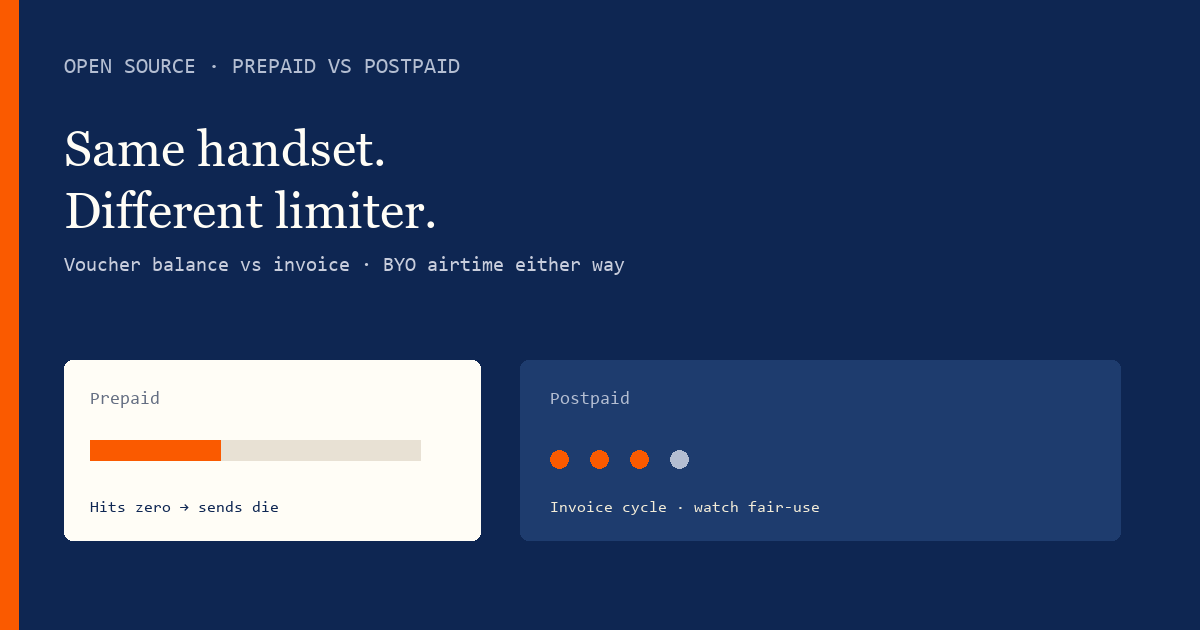
Teach staff: platform fees meter devices and volume; Free is 300 SMS lifetime; paid from $19/mo. Operator airtime is the customer’s carrier. Unused “credits” are not prepaid packs we cash out. Pricing.
Daily radio check
Spare charged phones beat SLA prose. After OEM updates, re-canary before promising OTP latency. Setup.
Secrets in tickets
No API keys, webhook secrets, or OTP digits in Zendesk/GitHub. Message ids and redacted error classes only.
When to escalate
Escalate when radio check is green but sends still fail, or when HMAC/webhook verification is involved — L2 owns that path via webhooks.
Checklist
- Radio-check card laminated or pinned.
- OTP vs marketing scripts separated.
- No secrets in tickets.
- Cost model answers rehearsed.
- Spare device drill quarterly.
Next steps
OTP launch gate: OTP launch checklist (open source).
Related product pages
Jump to the live product docs for this topic—not another long-form article.
- SMS API documentationLive endpoint reference
- device and SMS volume pricingPlans and allowances
- Android SMS gateway product guideDefinition, product, and how to buy
- download the Android gateway appGet the APK