Key Takeaways
- Train L1 to separate “API accepted” from “SIM delivered.” Most tickets mix those two clocks.
- Give support a one-page radio check: last-seen, battery, queue, SIM credit, pairing — before they page engineering.
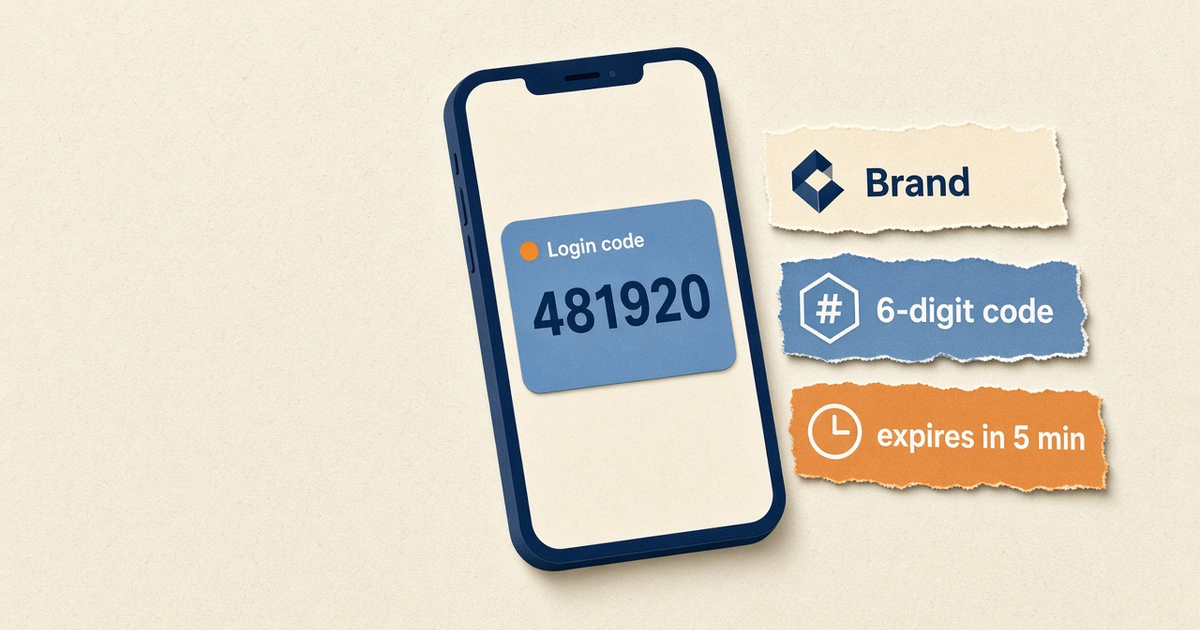
- Never collect API keys or full OTP bodies in tickets. Message ids and device nicknames are enough.
- OTP outages and campaign complaints need different device pools and different scripts.
- A spare charged phone beats an SLA paragraph when the gateway handset dies at 01:00.
- Staff should know we meter devices and send volume; operator airtime is the customer’s carrier, not a credit pack we sold.
Summary
Support for an Android SMS gateway is radio ops with a ticket skin. Agents who only know cloud APIs will chase application logs while the phone is asleep, the SIM is empty, or pairing dropped after an OEM update. Training should teach a short radio check, a clean split between accept and delivery, and a hard rule: no secrets in the ticket.
This how-to sits under the Android SMS Gateway App hub. Pricing stays devices plus SMS send volume; customers supply the handset and operator credit. Free includes 300 SMS lifetime — do not tell a prospect that unused “credits” roll over like a prepaid pack we sold.
The first question is not “is the API up?” It is “when did this phone last check in, and is it charging?”
Ticket lanes
Split the queue the way the product actually fails. OTP not arriving is a priority lane with a dedicated device pool. Campaign “slow send” is a pacing and consent lane. “App vanished overnight” is OEM battery. Mixing those scripts is how L1 burns 40 minutes on the wrong layer.
Give each lane a one-line definition and a first action. OTP: canary to a staff number on the same device. Overnight death: battery exemption + last-seen. STOP keyword ignored: device online? keyword saved? Then escalate.
What support actually owns
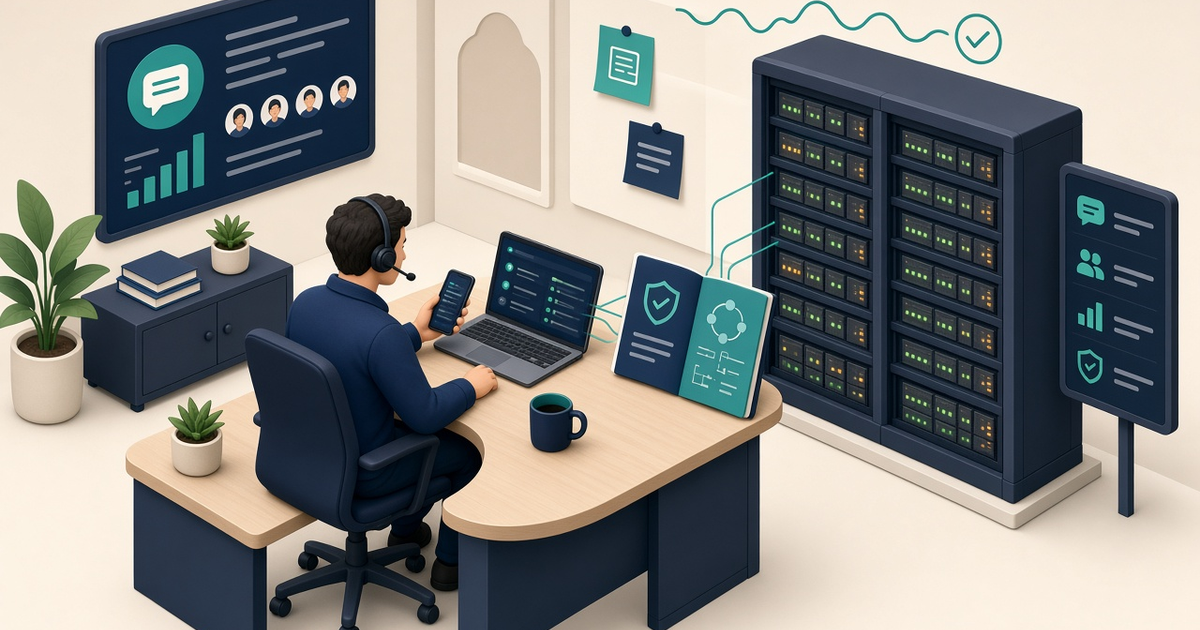
L1 owns triage, canaries, and customer-facing status. L2 owns pairing recovery, OEM matrices, and whether to fail over a spare handset. Engineering owns client bugs and control-plane defects. If your org chart puts all three on the same person, still write the three hats. Night-time OTP pages need a named human, not a Slack channel named “ops.”
Customers often compare the gateway to Twilio-style aggregators. Train staff to contrast own SIM + operator cost + device/volume service fee versus aggregator per-message plus rented numbers. Do not promise unmetered carrier SMS after a flat fee.
A training sequence that sticks
Run a half-day lab on real phones, not slides. Pair a device from the device setup guide. Send a canary. Unplug the phone. Watch last-seen go stale. Plug it back. Send another canary. That loop teaches more than a glossary.
- Tour the panel: device nickname, last-seen, queue, message id search.
- Shadow three live tickets with the radio check spoken out loud.
- Role-play a customer who pastes an API key — agent must refuse and rotate guidance.
- Role-play STOP: confirm consent record, then keyword, then device online.
- Drill spare-phone failover: pick up the charged spare, confirm pairing, canary, then resume.
Refresh after every APK or major OEM drop. Yesterday’s Samsung menu is not this month’s.
L1 vs L2 table
| Symptom | L1 first move | Escalate to L2 when |
|---|---|---|
| OTP missing | Last-seen, canary, message id | Canary fails or DLR stuck > 5 min |
| Bulk slow | Queue depth, rate, OTP isolation | Queue grows with healthy last-seen |
| Overnight silent | Charge + OEM battery exemption | Exemption set, still sleeping |
| STOP ignored | Device online, keyword list | Keyword saved, replies still send |
| Pairing lost | Clock, network, QR retry | QR fails after network confirmed |
| Airtime surprise | Retry loops, test traffic | Finance needs device-level volume |
Cost questions staff must answer
Support will be asked “why did we pay twice?” Train a two-layer answer: operator SMSC billed the SIM; the gateway billed devices and platform send volume. Retries from the customer’s client can spend both. We do not cash out unused SMS as prepaid packs. Refunds, when they apply, are platform plan fees — never operator airtime.
Point customers at device and SMS volume pricing instead of inventing per-message gateway fees.
The daily radio check
For every production device: pairing health, battery, queue depth, anomaly DLR rates. After OEM updates, re-run the critical path with a staff canary before promising customer OTP. Keep a spare charged device labeled with the same nickname convention as the primary.
Auto-reply and USSD questions belong with SMS auto-reply and STOP keywords and USSD balance and menu automation. Do not invent menu trees in the ticket.
What never goes in a ticket
API keys, full OTP bodies, raw webhook secrets, photos of the pairing QR that still works. Message ids, device nicknames, truncated MSISDN, and timestamps are enough. Rotate any key that hit chat. GSMA messaging programmes and local STOP rules still apply — see GSMA for industry framing, not as a substitute for counsel.
When to escalate
Escalate when the radio check is green and the canary still fails, when pairing will not recover, or when two devices disagree on the same job. Do not escalate “phone was in a drawer.” That is L1 with a stronger script.
If the customer cannot staff phone ops at all, help them evaluate a CPaaS lane honestly rather than pretending a dead handset will grow an SLA.
Checklist
- Radio-check card printed and in the agent’s first reply template.
- OTP vs campaign lanes named in the helpdesk.
- Lab drill completed on a real paired phone.
- Secret-handling rule signed (no keys, no OTP bodies).
- Spare device labeled, charged, paired.
- STOP / auto-reply path linked to the feature page.
- Pricing script: devices + volume; BYO airtime.
- On-call owner for OTP after hours.
- OEM battery notes for the brands you standardize on.
- Developer Center bookmarked; blogs are not the API contract.
Next steps
Pair from setup, download a known APK from downloads, and keep SMS API documentation next to the runbook. Troubleshooting depth lives in app troubleshooting.
Deep dive: production hardening
Shadowing should include a failed DLR, not only a happy canary. Agents need to say “accepted is not delivered” without sounding like they are dodging. Put DLR status on the same screen support already uses.
Nickname conventions save outages. “OTP-east-1” is better than “John’s old Samsung.” Multi-device fleets without names become archaeology.
Record who owns SIM top-ups per site. Support should know the person, not “finance maybe.”
After contractor access, rotate keys and tell support the old key is dead so they do not debug with it.
Deep dive: scaling and failure modes
As device count grows, L1 needs a fleet view, not a single-phone story. Teach health-aware routing language: skip a stale last-seen, do not spray the same OTP to every SIM.
Work profiles and family-link style setups isolate SMS permissions. Prefer a dedicated gateway device. Train agents to ask “is this the same Android user as the app?” early.
Wi-Fi-only tablets cannot send SMS. Cellular tablets with SIMs can. That one sentence prevents a class of tickets.
Deep dive: integration discipline
When a ticket is “our Laravel job failed,” L1 still starts at the phone. Then they collect the gateway message id for engineering. Do not let developers skip the radio check because the stack is familiar.
Webhook signature failures are L2/engineering. L1 should confirm the endpoint is HTTPS and that the customer did not rotate secrets only on one side.
How-to spokes still bill by devices and SMS send volume. Customers bring the Android phone and operator SMS credit.
Related product pages
Jump to the live product docs for this topic—not another long-form article.
- SMS API documentationLive endpoint reference
- device and SMS volume pricingPlans and allowances
- Android SMS gateway product guideDefinition, product, and how to buy
- download the Android gateway appGet the APK