Key Takeaways
- Multi-device in the app means extra radios, extra SIMs, extra chargers — metered as device count on the plan.
- Starter / Professional / Business cap paired Androids at 2 / 5 / 15. Dual SIM in one chassis still counts as one device.
- Omit routing and jobs hit the primary. Pass device ids when you need a pool. Live field names live in Developer Center.
- Failover is a spare that is already paired and charged, not a SIM tray on the dead phone.
- You bring every handset and every operator balance. Platform pricing is devices plus send volume.
android sms gateway app multi device is the grown-up version of “we left one phone in a drawer.” Throughput and failover are physical. The app on each handset is an independent worker. The plan meters how many workers you are allowed to register.
Feature page: multi-device and dual SIM. Dual-SIM ceilings: dual SIM limits. Pricing: devices plus volume. You supply every Android and every airtime balance.
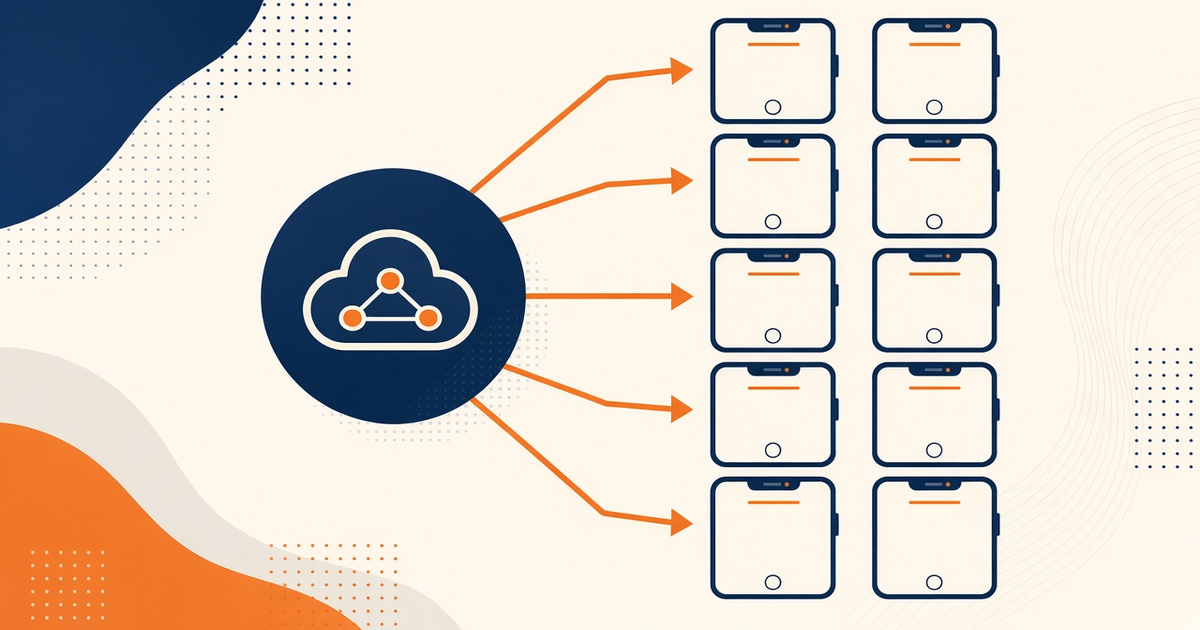
Paired fleet
Four green, one orange: that orange phone is still in the blast radius until you drain it.
Why the app cares about more than one phone
One modem is a proof of concept. Customer OTP wants a spare. Peak-hour bulk wants enough radios that OEM ceilings and fair-use do not serialize your Friday. The app’s job is stay registered, claim work, retry when the radio is busy. It will not invent extra spectrum.
Nickname the devices in the panel like you nickname production servers. “Phone” and “Phone 2” is how you fail over onto the marketing SIM at 2 a.m.
Plan device caps
| Plan | Paired Androids | Notes |
|---|---|---|
| Free | 1 | 300 SMS lifetime — lab one handset |
| Developer | 1 | Yearly SKU; SMS allowance capped (not Starter-style platform volume) |
| Starter | 2 | Primary + spare is the honest minimum for OTP |
| Professional | 5 | Room for OTP pool + campaign radios |
| Business | 15 | Peak-hour math, still not a CPaaS POP |
Starter/Pro/Business do not cap platform send volume the way Developer does. Devices still meter. Operator airtime is extra. Do not retitle this page “Unlimited SMS.”
How work actually splits
Default: primary device. Explicit routing: send to named device ids when you need a pool or a country SIM. Confirm on a canary which MSISDN the recipient saw. Live JSON is in the Developer Center, not in this article.
OTP pool vs everyone else
Pair OTP phones first. Never let a CSV campaign target that set. Two-way STOP on a login number needs a human policy. OTP vs bulk.
Health, pairing, and failovers
Each app install must survive reboot and OEM “optimize.” After updates, canary. App guide. Outage move: spare already paired — incident response. Dual SIM does not replace this.
What extra phones do not buy you
- Unlimited carrier SMS.
- A white-label reseller factory (branding is contracted, sending still meters devices + volume).
- An excuse to skip STOP subtracts.
- Coverage in a country where you have no SIM.
Next steps
Pair two phones on Starter if OTP is customer-facing. Time failover in the building, not on a slide. Download the app. Spend Free’s 300 lifetime SMS proving both radios before you add a third.
Related product pages
Jump to the live product docs for this topic—not another long-form article.
- multi-device and dual SIM routingCapacity and failover
- device and SMS volume pricingPlans and allowances
- Android SMS gateway product guideDefinition, product, and how to buy
- SMS API documentationLive endpoint reference