Key Takeaways
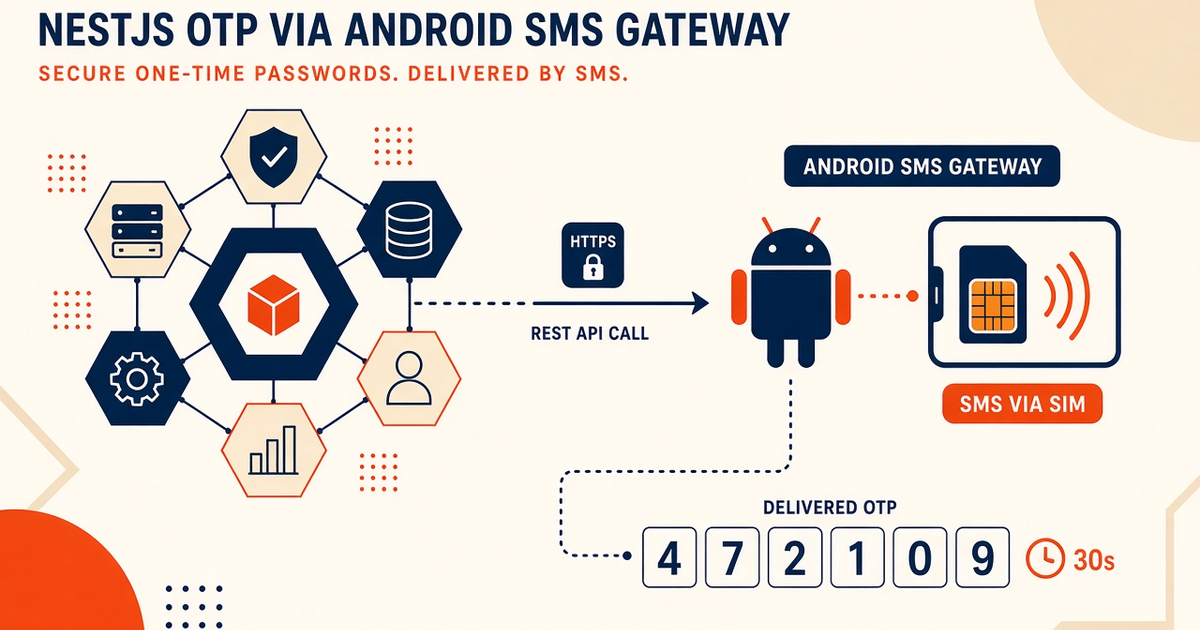
- NestJS sends OTP through SMS Gateway with a server-side HTTPS client (HttpModule/fetch) — REST JSON, not a Nest-branded SMS SDK product.
- Keep gateway calls in a provider or queue processor so HTTP handlers stay fast.
- Accept ≠ delivered. Persist message ids; confirm with DLR or webhooks.
- Isolate OTP templates and device pools from marketing workers.
- You need a working Android phone with a SIM and SMS credit from your mobile operator. Operator message costs are yours—we do not sell carrier SMS balance. Service pricing is based on device count and total SMS sent through the gateway. Free includes 300 SMS lifetime for staging.
NestJS teams search nestjs sms gateway with android device otp when they want login codes from their own SIM. This spoke is framework wiring over the same REST API as any other stack. Hub: Android SMS Gateway API. OTP product: OTP verification. Spec: SMS API documentation.
You need a working Android phone with a SIM and SMS credit from your mobile operator. Operator message costs are yours—we do not sell carrier SMS balance. Service pricing is based on device count and total SMS sent through the gateway. Pricing. Starter, Professional, and Business list Unlimited SMS as platform send volume; that is not unmetered carrier SMS.
NestJS + Android OTP
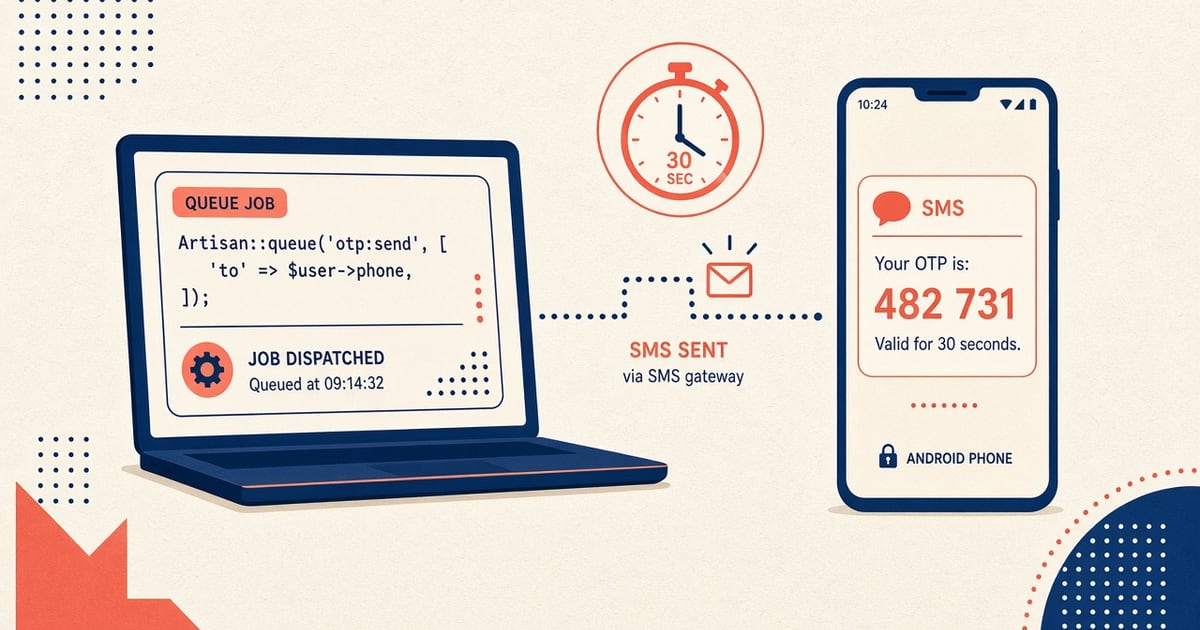
Generate the code in your app, store a hash + expiry, enqueue a send job, then verify on submit. The gateway only transports the SMS body through your paired phone. Pairing: device setup.
HttpService + ENV Bearer is enough. A third-party “Nest SMS SDK” is not the product; OpenAPI is.
HTTPS client, not an SDK package
Inject config for base URL and API key. POST JSON to / text (confirm names). Optional deviceIds for multi-device plans. Language samples on the marketing site are PHP/C# HTTPS examples — not a Nest package on npm from us.
Request → queue → send
Controllers return quickly after enqueue. Workers call the gateway with timeouts and backoff. Keep concurrency low per device; radios are not cloud SMSC farms. Templates: OTP template design.
Module responsibilities
| Nest piece | Owns | Does not own |
|---|---|---|
| Auth / OTP service | Code entropy, expiry, rate limits per MSISDN | Carrier deliverability |
| Queue processor | HTTPS send, Idempotency-Key, retries | Inventing API fields |
| Webhook controller | Signature verify, status updates | Blocking work in the request |
| ConfigModule | ENV secrets per environment | Keys in the frontend |
Verify and expiry
Align SMS expiry copy with measured P95 delivery. Wire DLR and webhooks before calling the path production.
Checklist
- Staging key in ENV; never in git.
- OTP queue separate from bulk/marketing.
- Idempotency-Key on send.
- Webhook HMAC verified.
- Canary on staff numbers.
Next steps
Related framework spoke: Spring Boot OTP. Multi-device: multi-device and dual SIM.
Related product pages
Jump to the live product docs for this topic—not another long-form article.
- OTP and 2FA SMS on AndroidAuthentication flows
- SMS API documentationLive endpoint reference
- device and SMS volume pricingPlans and allowances
- Android SMS gateway product guideDefinition, product, and how to buy