Key Takeaways
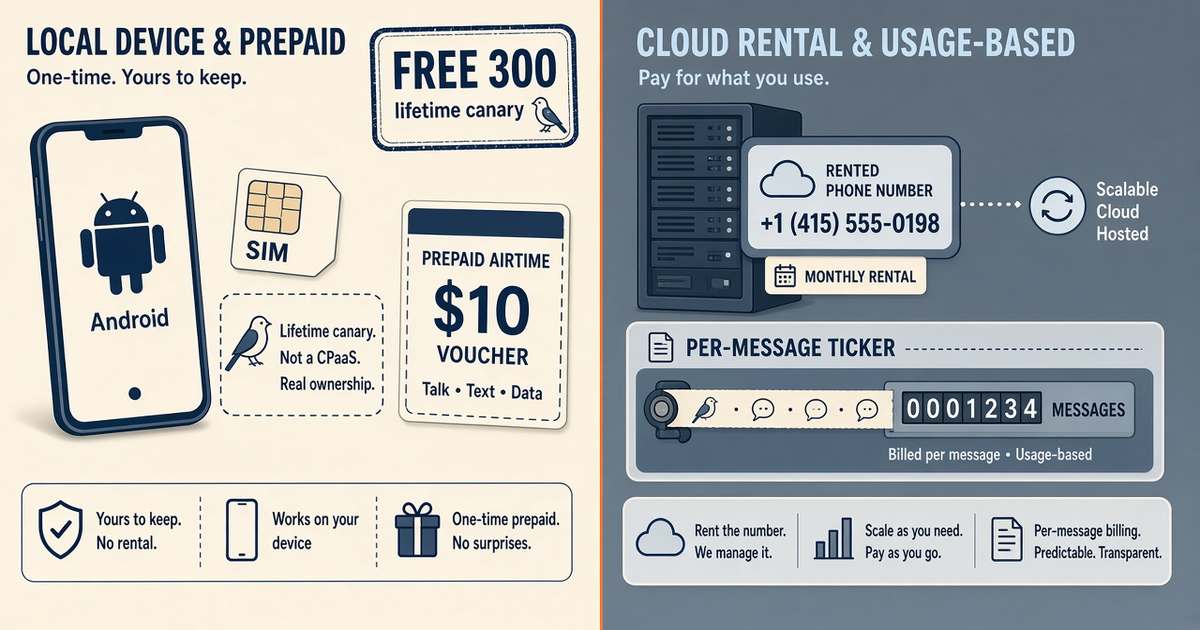
- A free SMS server on this product is 300 SMS lifetime, one Android, your operator credit — not a Twilio trial of rented numbers.
- Twilio-style APIs sell aggregator transport plus numbers. We sell a device + volume control plane in front of your SIM.
- Webhooks, long DLR retention, and multi-device are paid-plan terrain. Do not architect Free as if it were a CPaaS.
- When you need a rented CLI or global cloud SLA, the aggregator wins. When you need your MSISDN and local pulsa, the phone wins.
- Priced by devices and SMS send volume. You use your own phone and operator SMS credit. Plans are billed as device + SMS volume tiers—not aggregator-style $0.0x-per-message platform charging. Starter, Professional, and Business include unlimited platform send volume; Developer and Free have published SMS caps. Operator airtime remains separate, and carrier fair-use still applies.
Free is a canary, not Twilio minus zeros
“Free SMS server vs Twilio” is usually a category error. Twilio-class APIs rent numbers and bill aggregator traffic. This Free plan pairs your Android and meters 300 lifetime platform SMS. Free SMS server. How an Android SMS gateway works. Twilio SMS docs for their model — not ours.
If the pitch is “Twilio quality at $0 forever on one prepaid SIM,” close the tab. That sentence is how SIMs get burned and tickets get ugly.
What you actually buy
| Free Android server | Twilio-style CPaaS | |
|---|---|---|
| Last mile | Your SIM / operator SMSC | Aggregator + rented numbers |
| Platform fee | Device + volume (Free = canary cap) | Per message (+ numbers, usually) |
| Airtime | You, to the carrier | Bundled into their rate |
| Webhooks | Not on Free | Core to their DX |
| SLA | Your charger and OEM | Their status page |
Last mile: SIM vs aggregator
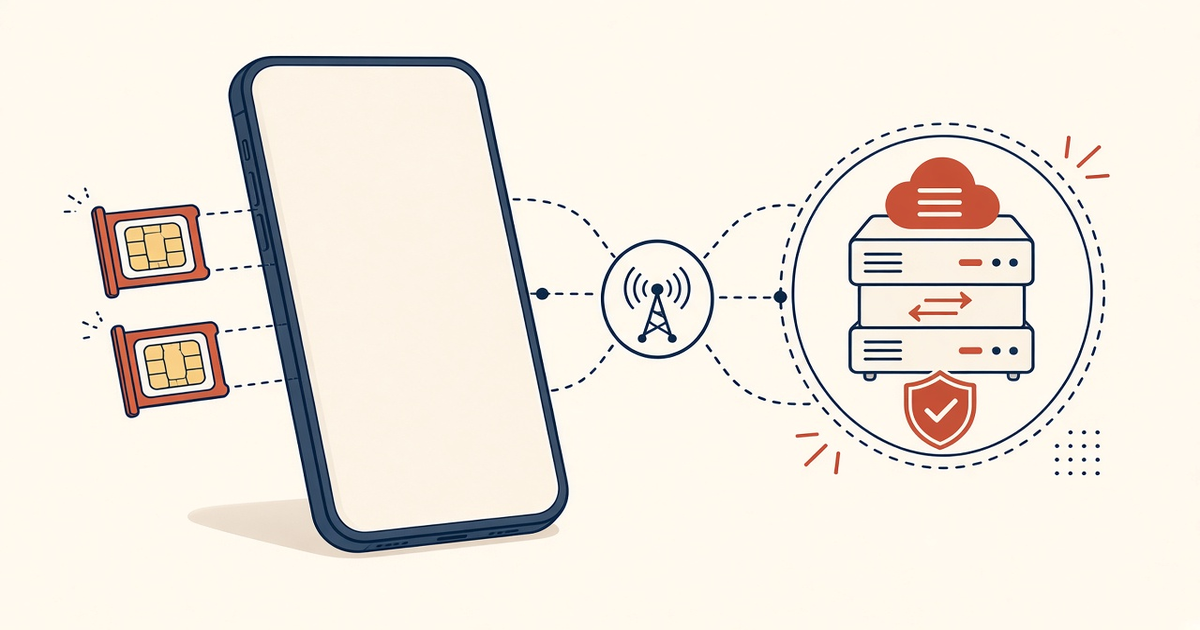
Recipients see your MSISDN on the phone path. They see a cloud number on Twilio. Android SMS gateway vs Twilio. Developer Center. No packaged SDK on our side — HTTPS JSON samples only.
Choose without lying to finance
- Write the last-mile sentence. If recipients must see your SIM, Android. If they must see a rented cloud number, aggregator.
- Split the invoices. Device + platform volume + pulsa versus per-message + number rental. Never one blended “SMS cost.”
- Match Free to a canary, not production OTP. 300 lifetime SMS vanishes in a week of logins. Upgrade or stay on CPaaS.
- Check callbacks. Webhooks are not on Free. Poll with backoff or pay Starter. Twilio Programmable SMS assumes callbacks you designed for.
- Canary both paths on staff numbers. Same template, two CLIs, two DLR stories. Do not load-test filters.
- Document the hybrid. Which countries stay on the phone. Which stay on the aggregator. Who owns STOP on each CLI.
TCO spoke: TCO vs Twilio. Webhooks on Free: Free webhook in-depth.
Hybrid is normal
Domestic OTP on a charged Pixel; long-tail countries on an aggregator. Isolate deviceIds. Dual SIM ≠ two vendors.
The two invoices
Service pricing is based on device count and total SMS sent through the gateway. You need a working Android phone with a SIM and SMS credit from your mobile operator. Operator message costs are yours—we do not sell carrier SMS balance. Paid from $19/month after Free. Device and SMS volume pricing.
Next steps
Write the last-mile sentence, pick canary vs CPaaS vs hybrid, then stop calling 300 lifetime SMS a Twilio killer.
Related product pages
Jump to the live product docs for this topic—not another long-form article.
- device and SMS volume pricingPlans and allowances
- Twilio vs Android SMS gatewayCloud vs own-SIM cost model
- Android SMS gateway product guideDefinition, product, and how to buy
- SMS API documentationLive endpoint reference