Key Takeaways
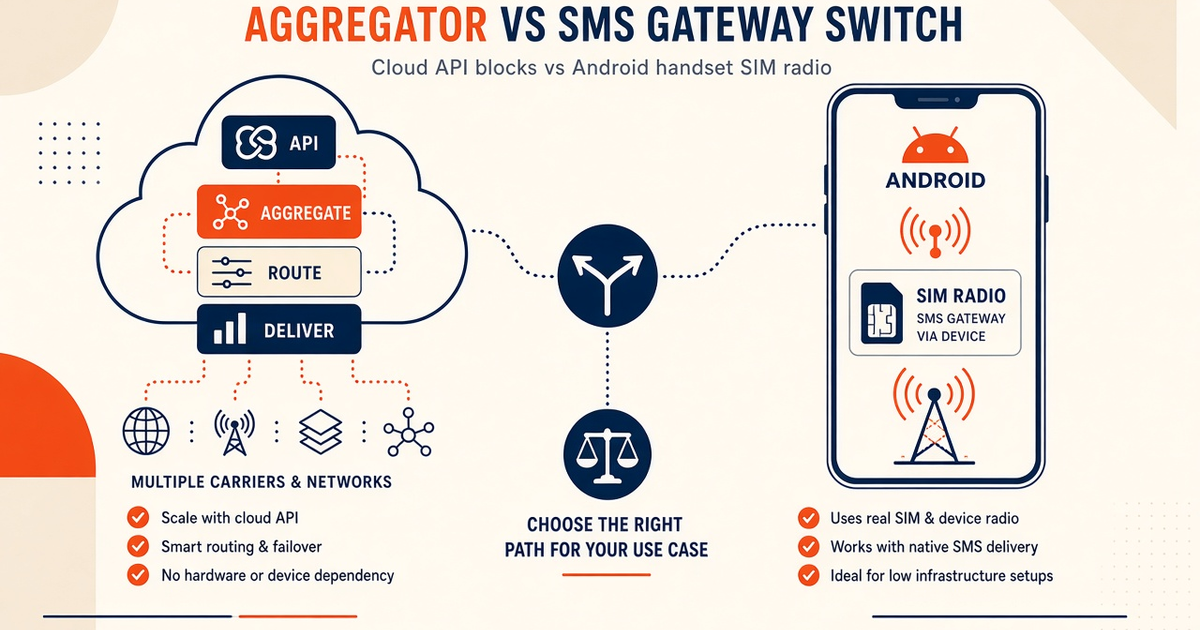
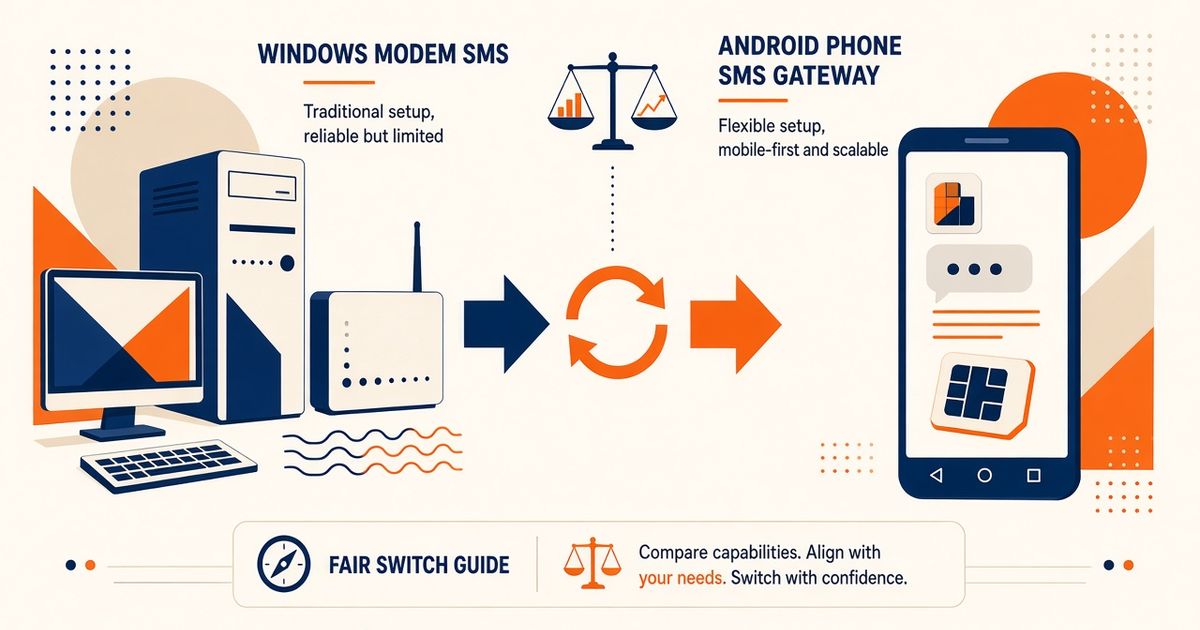
- When to switch between a generic CPaaS and an Android SMS gateway is usually a routing decision, not a religion.
- Stay on your SIM when recipients should see a real MSISDN, you already buy airtime, and you can keep phones online.
- Stay on (or move to) CPaaS when you need rented numbers in many countries and refuse handset ops.
- Hybrid — Android for domestic OTP, aggregator for long-tail geos — is normal. Do not force one vendor story.
- Service pricing is based on device count and total SMS sent through the gateway. You need a working Android phone with a SIM and SMS credit from your mobile operator. Operator message costs are yours—we do not sell carrier SMS balance.
generic CPaaS vs Android SMS Gateway: When to Switch is the spoke after the cornerstone comparison. Read Twilio vs Android SMS gateway and the in-depth Twilio contrast first. This page is the cutover question: stay, leave, or split. Catalog of other matchups: comparisons.
Plans are billed as device + SMS volume tiers—not aggregator-style $0.0x-per-message platform charging. Starter, Professional, and Business include unlimited platform send volume; Developer and Free have published SMS caps. Operator airtime remains separate, and carrier fair-use still applies. Confirm Android send fields in the Developer Center.
One idea, two radios. Route in your app. Do not wait for a vendor to bless hybrid.
When “switch” is the wrong verb
Teams search this phrase after a CPaaS invoice or after a phone that died at 2am. Those are different pains. Switching the whole company overnight is how you strand password resets on a SIM with no signal. Prefer a feature flag per destination prefix.
If you cannot name the country, the message class, and who owns the handset, you are not ready to switch. You are ready to argue.
Stay on the Android SIM path
Recipients should see a number they can call back. You already buy airtime. OTP volume fits a spare phone plus Starter’s 2 devices so login is not sharing a campaign radio. Ops can do OEM exemptions and prepaid. OTP verification · how the gateway works.
Leave the SIM path (or never start)
You need rented numbers in geos where you will not hold a SIM. Nobody on the team will keep a drawer charged. Procurement wants a cloud SLA with no customer hardware. Then CPaaS (or staying there) is the honest default — including Twilio-style APIs. Their docs, for contrast: Twilio SMS.
Decision table
| Signal | Lean Android SIM | Lean CPaaS |
|---|---|---|
| Caller ID | Real MSISDN you own | Rented / 10DLC / sender ID |
| Bill shape | Airtime + devices/volume plan | Per-message aggregator |
| Coverage | Countries where you hold SIMs | Long-tail geos |
| Ops | You can host phones | No hardware allowed |
| OTP SLO | Spare funded handset | Vendor SMSC, no drawer |
| Two-way | Inbox on the SIM | Vendor inbound number |
Hybrid is the usual grown-up answer
Route +1 marketing to the aggregator if that is what compliance bought. Route domestic OTP to the paired Android. Same Express/Laravel worker, two clients, one idempotency story. Express OTP on Android.
TCO, not sticker
CPaaS looks cheap until volume and number rental stack. Android looks cheap until you count spare phones and a human who watches last-seen. Spreadsheet operator cost separately: estimate monthly operator cost. Service pricing is based on device count and total SMS sent through the gateway.
OTP is the tie-breaker
If login SMS is the product, measure canary latency on a cold phone before you cut over. If you cannot pass that test, do not “switch” OTP — keep it on the path that already works. Delivery reports. Industry messaging practices: CTIA.
Next steps
Flag one prefix, send staff OTP both ways, compare DLR and invoice shape, then decide. Install the Android app · pricing. Free is 300 SMS lifetime — a lab, not a CPaaS replacement pack.
Related product pages
Jump to the live product docs for this topic—not another long-form article.
- SMS API documentationLive endpoint reference
- device and SMS volume pricingPlans and allowances
- Twilio vs Android SMS gatewayCloud vs own-SIM cost model
- Android SMS gateway product guideDefinition, product, and how to buy