Key Takeaways
- Gateway server GDPR-minded data handling is about the control plane: pairing, last-seen, queued payloads, and webhook retries — not your application ORM.
- Hub F cornerstone is the Android SMS gateway server guide. API sibling: backend GDPR how-to. Clock sibling: log retention policy.
- You decide send purposes. The relay stores what you configured it to keep. Align /privacy notices with that fact.
- A DSAR that only searches the CRM misses the device nickname and the outbox dump.
- Priced by devices and SMS send volume. You use your own phone and operator SMS credit. Free is 300 SMS lifetime — a volume cap, not a privacy exemption.
- Not legal advice. ICO maps help; counsel owns the statute.
Hub F how-to: android sms gateway server how to gdpr minded data handling. The control plane sits in front of your SIMs. Android SMS gateway server. Application-side cousin: API GDPR-minded handling. Clock: log retention policy. Notices: privacy, security and trust.
Priced by devices and SMS send volume. You use your own phone and operator SMS credit.
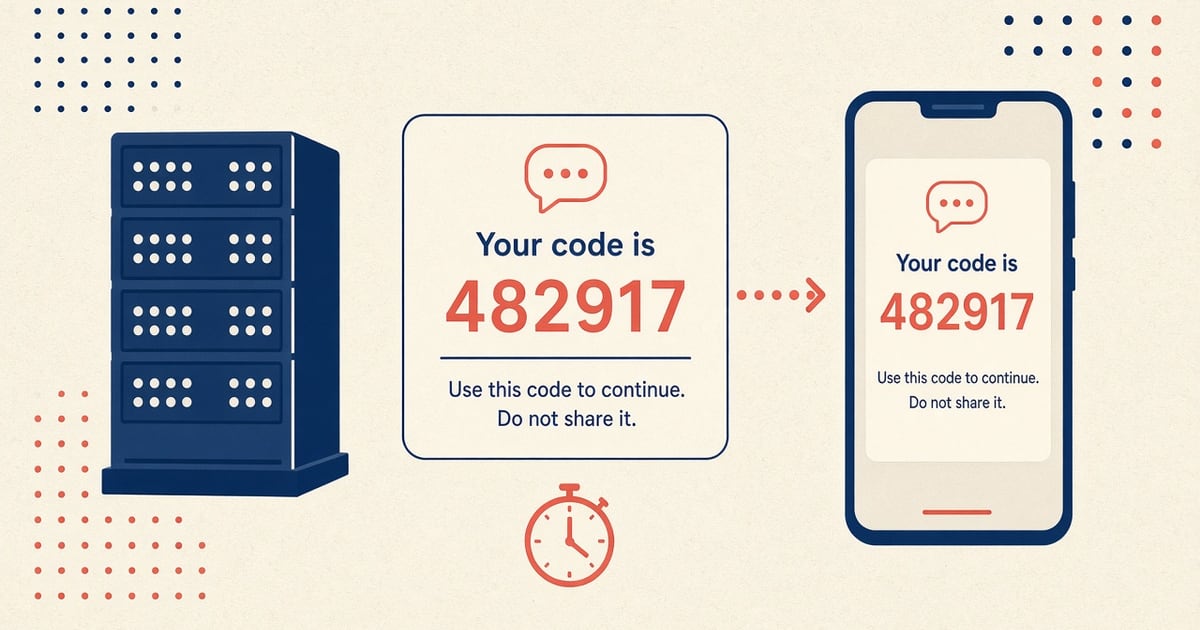
If the VPS still has last month’s login codes in a debug log, the phone being “offline” is not your privacy story. The disk is.
The server is a second copy of the inbox
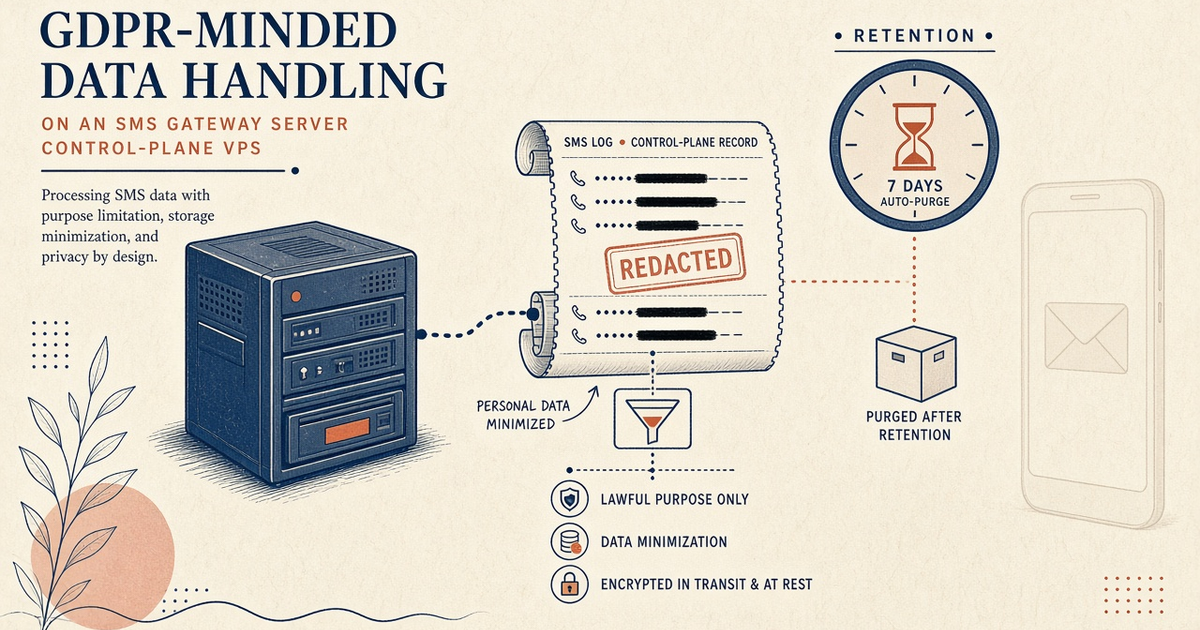
Cloud relay and local HTTP both persist something: queued JSON, device nicknames, webhook delivery attempts. GDPR-minded ops means knowing which copy exists and who can read it — not hoping the APK is the only store. Data retention in-depth.
Controller vs processor vs the SIM
You choose purposes. The gateway server processes what you send through it. The mobile operator processes the radio. Do not collapse those three into one privacy policy sentence. External map: ICO UK GDPR resources.
What the control plane actually holds
| Store | Typical contents | GDPR-minded default |
|---|---|---|
| Device registry | Nickname, last-seen, pairing | Access list + delete when the phone leaves |
| Outbox / queue | Destination + body until send | TTL; no forever “debug” |
| Webhook retries | Signed payloads you already processed | Same retention as the event, then drop |
| Support export | Logs you emailed to a vendor | Treat as a disclosure; minimize |
| Your app DB | Whatever you POST then save | API GDPR how-to — not this page |
DSAR is last-seen plus message ids
A subject access request that only greps the CRM misses the closet nickname and the queued row. Write which systems you search. Keys for who can export: secure API keys in env.
OTP bodies on the relay
Login codes are personal data with a short life. If the server logs the body at info level, you built a second authenticator dump. OTP verification.
This is not the log-retention how-to
Days-on-disk, rotation, and support-export windows live on log retention. This page is lawful purpose, roles, and what not to keep in the first place.
Not a DPIA
We do not certify your processing. Counsel, a DPA, and actual configs beat a blog. Product trust copy stays on security.
Checklist
- Named owner of relay retention.
- OTP bodies not in forever logs.
- DSAR runbook includes the gateway server.
- Support exports minimized.
- Access to device registry is least-privilege.
- Webhook retry store has a TTL.
- Notices match reality.
- Developer Center — no invented dump APIs.
- Free volume cap is not a GDPR waiver.
- Link the log-retention how-to, do not duplicate it.
Next steps
Pair with the server hub and pricing. The radio is personal data in motion. The VPS is personal data at rest.
Related product pages
Jump to the live product docs for this topic—not another long-form article.
- SMS API documentationLive endpoint reference
- device and SMS volume pricingPlans and allowances
- Android SMS gateway product guideDefinition, product, and how to buy
- download the Android gateway appGet the APK