Key Takeaways
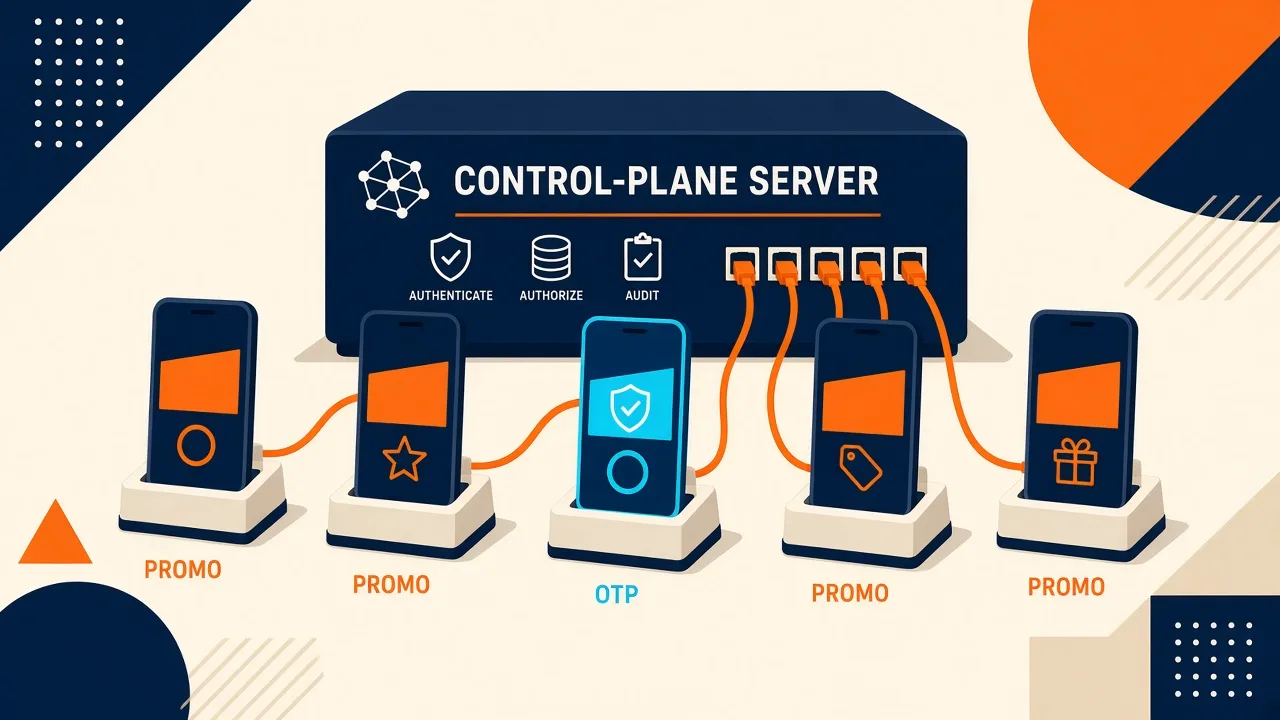
- Android SMS gateway server multi-device means several paired Androids on the control plane — each a plan slot, each a SIM with operator credit.
- Dual-SIM is still one battery and one OEM killer. Failover is another deviceId. This spoke is how you run the fleet, not the dual-SIM feature page.
- Starter meters 2 devices, Professional 5, Business 15. Connected docks count, including spares.
- Pass deviceIds to pin or split. Omit them and the primary takes the send.
- Service pricing is based on device count and total SMS sent through the gateway. You need a working Android phone with a SIM and SMS credit from your mobile operator. Operator message costs are yours—we do not sell carrier SMS balance.
Android SMS gateway server multi-device is Hub F capacity: you already have a reachable control plane, and now you are adding named phones so OTP, receipts, and campaigns do not share one radio. It is not a rewrite of dual-SIM hardware, and it is not the failover fire-drill page.
Service pricing is based on device count and total SMS sent through the gateway. Architecture: server guide. Feature: multi-device / dual-SIM. Failover spoke: failover setup.
Five phones on one USB charger and one unpaid prepaid is not a fleet. It is a single point of hunger.
Many phones, not one dual-SIM
Dual-SIM can pick a slot on one chassis. Multi-device survives a smashed screen because another deviceId still answers. Backup device.
Pool design
| Pool | Job | Do not |
|---|---|---|
| OTP | Login / 2FA only | CSV campaigns |
| Transactional | Receipts, shipping | Share last healthy OTP radio |
| Promo | Paced bulk | Ignore OEM ceilings |
| Spare | Paired, charged, funded | Leave in a drawer “just in case” |
Plan device slots
Count every connected dock. Device-count planning. Pricing: Free/Developer 1 device; Starter 2; Professional 5; Business 15. Platform send volume on the last three is not a Developer-style SMS cap — carrier fair-use and device meters still apply. You need a working Android phone with a SIM and SMS credit from your mobile operator. Operator message costs are yours—we do not sell carrier SMS balance.
deviceIds on send
Documented split (docs win):
curl -X POST "https://app.sms-gateway.app/api/v1/messages" \
  -H "Authorization: Bearer $SMS_GATEWAY_API_KEY" \
  -H "Content-Type: application/json" \
  -d '{"to":["+14155552671"],"text":"Your login code is 481920. It expires in 5 minutes.","type":"sms","deviceIds":[3]}'
Name devices in the panel so on-call is not guessing serials. Confirm fields in OpenAPI.
OTP ring-fence
Pin login to OTP deviceIds. OTP. Pace promo on the others. Bulk.
Checklist
- Each dock named, charged, exempted, funded.
- Slot count includes spare.
- OTP deviceIds never on campaign workers.
- Last-seen alerts per device.
- No invented simSlot / failover flags.
Next steps
Pair the second phone before you need it. Kill the primary in staging. Prove OTP still leaves the cyan dock.
Related product pages
Jump to the live product docs for this topic—not another long-form article.
- multi-device and dual SIM routingCapacity and failover
- device and SMS volume pricingPlans and allowances
- Android SMS gateway product guideDefinition, product, and how to buy
- SMS API documentationLive endpoint reference