Key Takeaways
- Shipyard dual-SIM is drydock SIM A for block-release and quay SIM B for barge ETA — never one radio for both hull and harbor.
- Bind hull last-four to the block ticket in the template. A generic “ship ready” is not a yard packet.
- Keep driver OTP off the drydock tablet that dumps block bursts.
- Service pricing is devices plus SMS send volume. You bring the Android phone and operator credit.
- Free is 1 device, 300 SMS lifetime, 300 contacts. Developer is 25,000 SMS per year.
- Honor STOP on quay nags. Block-release SMS stays operational; backhaul upsells do not.
Summary
Logistics dual-SIM in scenario 1719 is shipyard: drydock SIM A for block-release, quay SIM B for barge ETA. Unlike depot ETA, last-mile, returns, cold-chain, air-cargo, port-gate, rail, customs, DG/hazmat, pick-wave, PUDO, barge, mine-haul, hospital STAT, ferry RoRo, jobsite crane, waste route, snow-plow, grain elevator, lumber kiln, pipeline ROW, quarry blast, wind-farm CTV, logging landing, ready-mix plant, asphalt plant vs paver, steel mill vs coil yard, or refinery vs tank farm, this split is hull versus harbor, not a rundown.
Service pricing is devices plus SMS send volume. You bring the Android phone and operator SMS credit. Free is 1 device, 300 SMS lifetime, 300 contacts. Developer is 25,000 SMS per year. Starter, Professional, and Business list Unlimited SMS as platform send volume; devices and airtime stay metered.
One radio for drydock blocks and quay ETAs mixes two clocks. Route drydock A and quay B. Send hull last-four. Keep the full hull number in the yard system.
Key takeaways
- Shipyard dual-SIM is drydock SIM A for block-release and quay SIM B for barge ETA — never one radio for both hull and harbor.
- Bind hull last-four to the block ticket in the template. A generic “ship ready” is not a yard packet.
- Keep driver OTP off the drydock tablet that dumps block bursts.
- Service pricing is devices plus SMS send volume. You bring the Android phone and operator credit.
- Free is 1 device, 300 SMS lifetime, 300 contacts. Developer is 25,000 SMS per year.
- Honor STOP on quay nags. Block-release SMS stays operational; backhaul upsells do not.
Related reading
Start from multi-device and dual-SIM routing, compare device and SMS volume pricing, open transactional SMS, and review IMO notes where they apply — SMS is not a ship certificate.
Context
Yard desks land here after drydock block SMS starved quay ETAs on one SIM, or after a full hull number leaked in a template. Driver OTP cannot share that tablet.
Core scenario guidance
Route drydock A vs quay B. Template: hull last-four. Drop full hulls. Honor STOP on nags. Isolate OTP.
| Lane | SMS body | Fail closed |
|---|---|---|
| Drydock SIM A | Hull last-four + release | Full hull number |
| Quay SIM B | Barge ETA | Same SIM as drydock |
| STOP | Suppress quay nags | Keep driver OTP |
| Driver OTP | Separate device | Same SIM as block burst |
Canary a staff hull after OS updates. MCP wraps REST. Developer Center owns fields.
Cost and ownership
Devices + volume + operator airtime on every retry. Developer is 25,000 SMS per year. Free (1 / 300 / 300) proves pairing, not a yard desk.
Operations
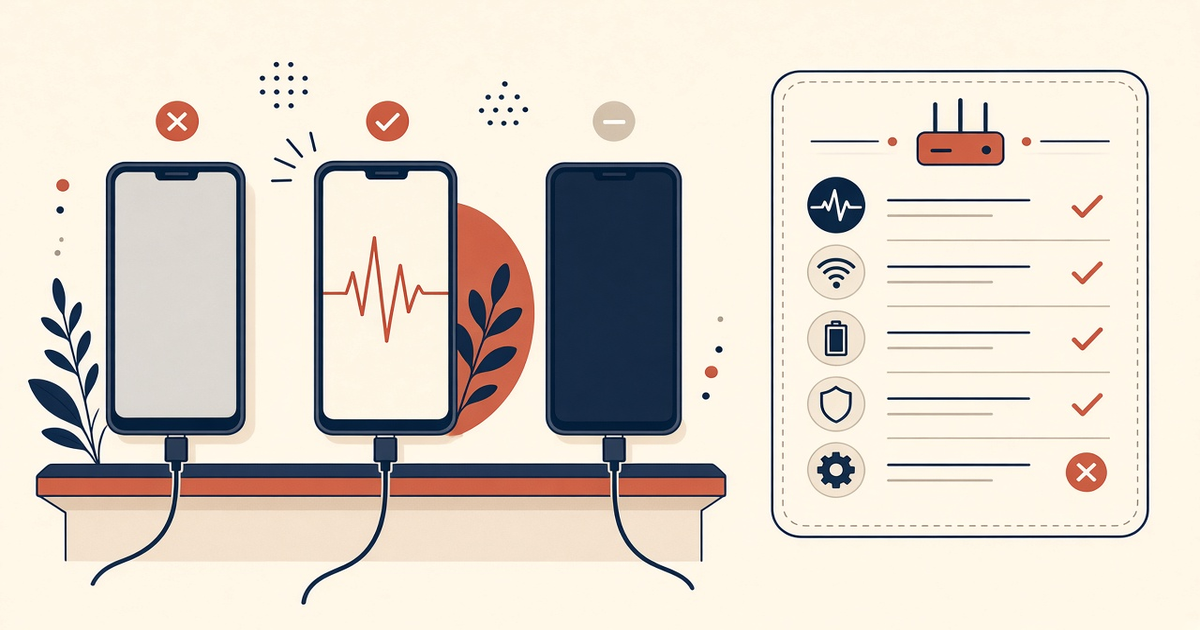
Daily last-seen, battery, drydock vs quay SIM health. After a block-release change, one staff canary. On-call before unattended night tides.
Security and compliance
Hull numbers identify vessels. Encrypt at rest. Never log full hulls from SMS. Verify TLS on every callback.
Decision guide
Ship when A/B routing, last-four templates, STOP, and OTP isolation exist. Delay if drydock and quay share one SIM. If zero phone ops is mandatory, evaluate CPaaS for that slice.
Checklist
- Drydock A vs quay B.
- No full hull in SMS.
- Honor STOP on nags.
- OTP isolated.
- Spare paired.
Next steps
Return to Android SMS gateway app guide, compare device and SMS volume pricing, open device setup, and confirm APIs in SMS API documentation.
Deep dive: production hardening
Dual-SIM ownership before radio is non-negotiable. A block burst on the quay SIM still spends airtime and starves ETAs. Battery exemptions dominate overnight tides.
Deep dive: scaling and failure modes
Scale is hulls times blocks, not a blast of the book. Never claim unlimited free cloud SMS credits with no device or volume meter.
Deep dive: integration discipline
Developer Center owns live API parameters. Persist hull id + block last-four. MCP is a REST wrapper. If zero phone ops is mandatory, evaluate CPaaS. You bring the Android phone and operator credit.
Related product pages
Jump to the live product docs for this topic—not another long-form article.
- multi-device and dual SIM routingCapacity and failover
- transactional SMS for orders and alertsEvent-driven messages
- SMS delivery reports (DLR)Delivery status tracking
- SMS API documentationLive endpoint reference