Key Takeaways
- android sms gateway for ngos architecture is programme events → your API → Android SIMs you (or a partner) operate — not an aggregator inbox.
- Never mix donor fundraising blasts with staff security alerts or beneficiary case OTP on one radio.
- Field offices need a spare charged handset. A coordinator’s personal phone is not a modem.
- USSD is for balance and menus on that SIM. Do not treat it as a case-management database.
- Priced by devices and SMS send volume. You use your own phone and operator SMS credit. The organisation funds operator airtime.
- Counsel owns data-protection law. The gateway is transport. This is not legal advice.
HQ app, field worker, radios
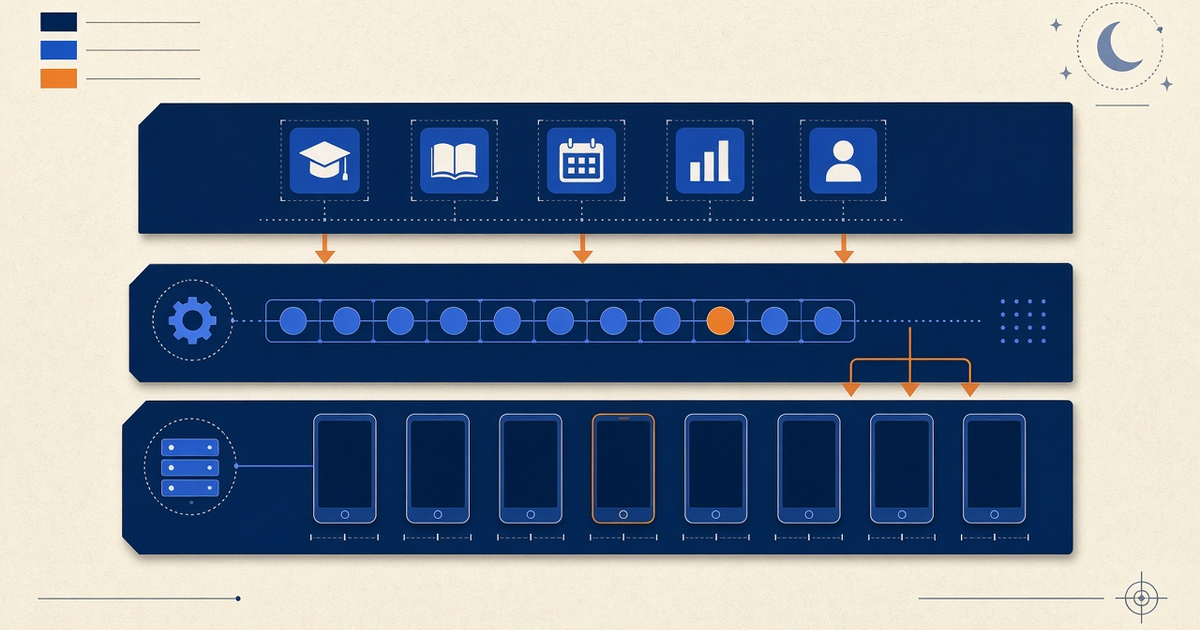
Vertical intent for android sms gateway for ngos is architecture: how a programme emits SMS without putting a modem in every field laptop. Service pricing is based on device count and total SMS sent through the gateway. The MIS decides content; a worker calls the control plane; paired Androids transmit in-country.
A year-end donor blast on the same SIM as staff two-factor is how you lock coordinators out during the appeal.
Physical security matters: SIMs with airtime are cash. Lock the modem rack. Rotate keys when a contractor leaves — API keys in env.
Fundraising vs ops vs staff OTP
- Staff / volunteer portal OTP — pinned device, short TTL.
- Operational: clinic hours, distribution sites, security check-ins — consented lists.
- Fundraising and newsletters — STOP, separate SIM, quiet hours.
| Layer | Owns | Must not |
|---|---|---|
| MIS / CRM / grants app | Who to text, template, consent flags, quiet hours | Ship the Bearer token in a public volunteer APK |
| HQ or country worker | Idempotency, deviceIds, suppress join, retries | Firehose a 20k donor list at one modem |
| Control plane | Queue, pairing, DLR, webhooks | Be mistaken for the operator SMSC |
| Field Android radios | Transmit on the SIM; last-seen; OEM exemptions | Leave with a staffer overnight as their only phone |
OTP: OTP verification. Bulk appeals: bulk SMS. STOP: auto-reply and STOP.
USSD for airtime, not for case files
USSD on the gateway phone is for checking that SIM’s balance or operator menus — not for storing beneficiary records. USSD gateway. Case data stays in the MIS with access control. Minimize SMS bodies; do not text case notes. GDPR-minded handling. ICO guidance is a starting point for UK/EU programmes (ICO UK GDPR).
Beneficiaries, donors, STOP
Donor marketing needs a recorded opt-in and STOP. Operational alerts to registered beneficiaries still need a lawful basis your counsel can defend. Shared household phones are common in the field — assume the recipient is not always the data subject. Quiet hours in the worker, not “the carrier will know.”
Architecture failure modes
- Cron retry without idempotency → duplicate “distribution moved” texts.
- Coordinator-owned gateway phone that leaves the office.
- One CSV mixing staff OTP and donor promo.
- Webhook down so the MIS never sees DLR.
Dual SIM can add a second operator in a weak-coverage district; still one device meter. Multi-device and dual SIM. Docs: docs.sms-gateway.app.
NGO architecture checklist
- Device map: otp / ops / fundraising / spare.
- Quiet-hours per country timezone.
- Idempotency-Key on event SMS.
- DLR webhook into the MIS.
- Physical lock on the modem shelf.
- Airtime owner named per country office.
Next steps
Draw the four layers, pair a spare from setup, send a staff OTP plus one ops canary, then a 5% donor slice with STOP. Pricing. Priced by devices and SMS send volume. You use your own phone and operator SMS credit.
Related product pages
Jump to the live product docs for this topic—not another long-form article.
- SMS API documentationLive endpoint reference
- device and SMS volume pricingPlans and allowances
- Android SMS gateway product guideDefinition, product, and how to buy
- download the Android gateway appGet the APK