Key Takeaways
- android sms gateway for agencies is running client OTP/alerts on Android SIMs you (or the client) host — not selling carrier packs.
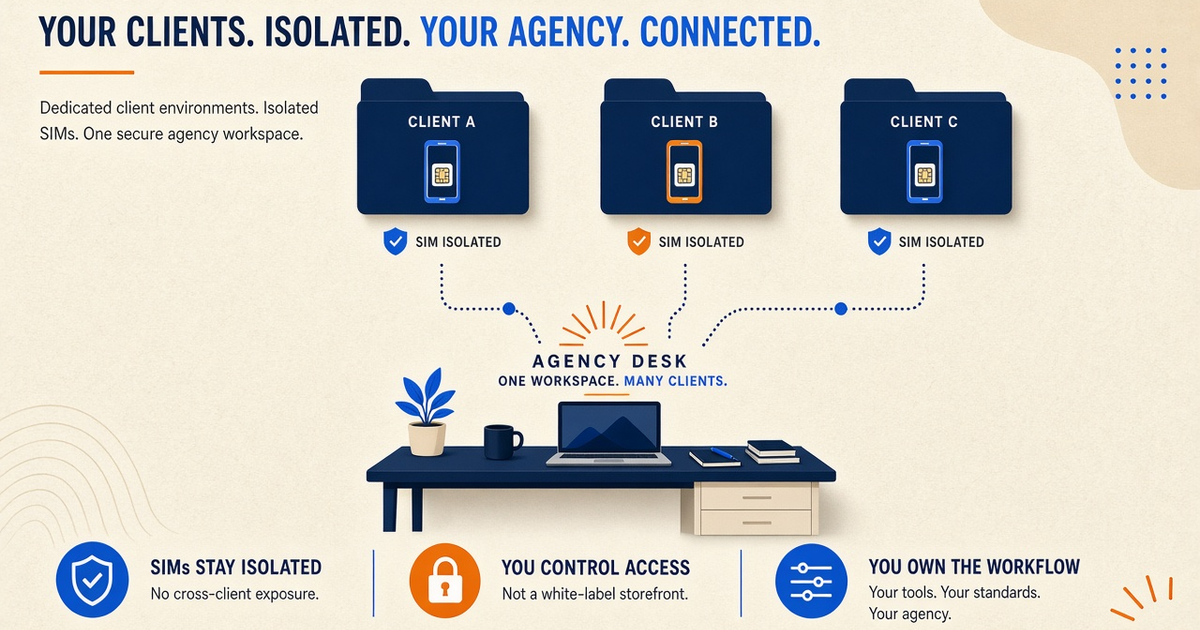
- Isolate clients: separate devices, keys, and suppress lists. One shared promo SIM is how brands poison each other.
- Custom panel branding is contracted (white-label from a setup price). It is not a self-serve multi-tenant SMS shop.
- Priced by devices and SMS send volume. You use your own phone and operator SMS credit. Each client still funds operator airtime.
- STOP and consent are per brand. Your CRM join must not leak lists across accounts.
- Pilot on Free (300 SMS lifetime) per client before you rack a fleet.
What agencies actually buy
Search intent for android sms gateway for agencies is “can we run client OTP and reminders on real numbers without aggregator per-message math?” Yes, if you host phones and SIMs (or make the client host them).Service pricing is based on device count and total SMS sent through the gateway.
An agency that mixes three brands on one prepaid SIM will spend the next quarter explaining why STOP on Brand A also killed Brand B’s 2FA.
Not a turnkey SMS resale product
Do not pitch this as a white-label storefront for selling carrier SMS. Custom branding of the panel is a contracted setup (From $2,000) and still sits on device + volume plans. Talk to sales via contact. You bring Android hardware and operator credit.
Contrast aggregator billing on Twilio vs Android SMS gateway when a client needs rented numbers and zero handset ops.
Client isolation on SIMs and keys
| Layer | Minimum | Better |
|---|---|---|
| SIM / MSISDN | Per-client default deviceId | Per-client handset (and spare) |
| API keys | Separate keys per environment | Per-client key, rotated on staff change |
| Suppress / STOP | Join on E.164 inside that brand | Brand-scoped lists; never a global agency dump |
| Templates | No leftover merge tags | Legal-reviewed per locale; OTP vs promo split |
| On-call | Someone with physical access to the rack | Named owner in the SOW including top-ups |
Keys in env per worker — API keys in env. Lists: contact lists API.
Who owns the phone drawer
Write it in the SOW: power, pairing, OEM exemptions, top-ups, spare. If the agency keeps the rack, charge for that labor. If the client keeps it, you still need remote last-seen and a canary. Setup: device setup.
Consent follows the brand
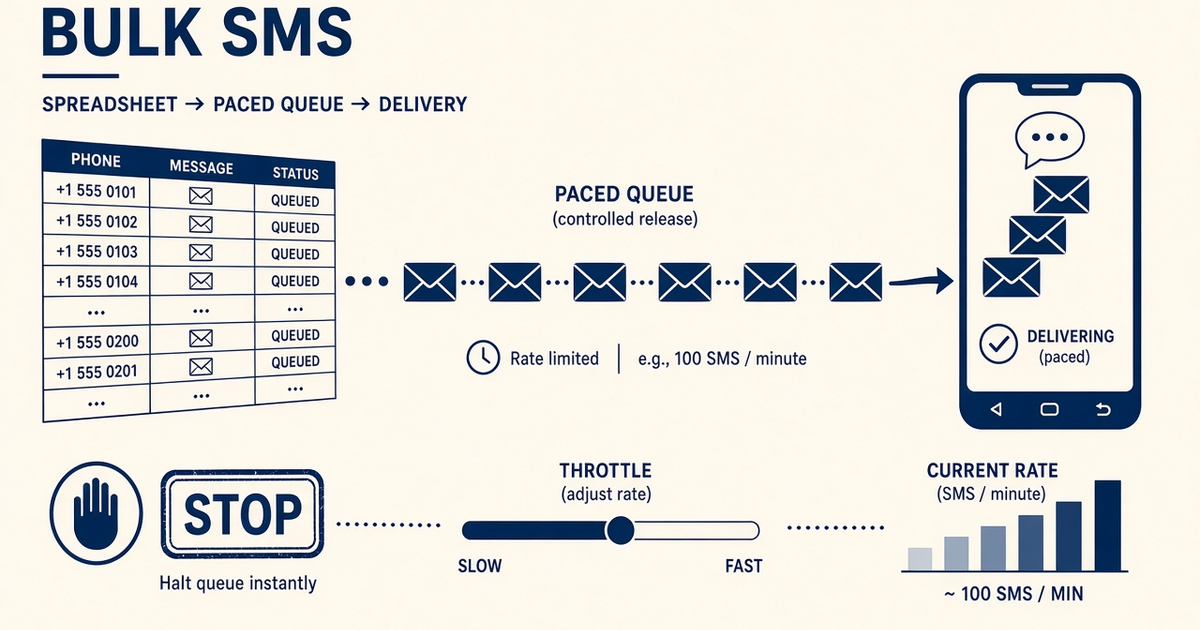
The sender ID the customer saved is the brand’s SIM. STOP on that number. Do not reuse a list from Client A for Client B “because it’s the same vertical.” Bulk SMS and auto-reply and STOP.
Free canaries: 300 SMS lifetime per proving account — not a campaign pack.
Agency checklist
- Per-client device map in the runbook.
- SOW names airtime owner.
- No shared promo SIM across brands.
- Webhook suppress scoped by brand id.
- No “unlimited SMS” in sales decks — operator fair-use still applies.
Next steps
Pilot one client on one phone from downloads, then size devices on pricing. API: docs.sms-gateway.app.
Related product pages
Jump to the live product docs for this topic—not another long-form article.
- device and SMS volume pricingPlans and allowances
- Android SMS gateway product guideDefinition, product, and how to buy
- SMS API documentationLive endpoint reference
- download the Android gateway appGet the APK