Key Takeaways
- Gateway phones are operated by tired humans on small screens — contrast, type size, and status copy are production controls.
- Last-seen, battery, queue, and pairing must be readable without a 20-minute hunt through OEM menus.
- Label devices physically. A nickname in the panel that does not match the tape on the chassis causes wrong-SIM tickets.
- Work profiles and tiny tap targets break SMS permission as surely as Doze does.
- Install from official downloads; canary after every APK.
- Devices + volume pricing still applies; you bring the phone and operator airtime.
This Hub D spoke is about accessibility and UX for operators of the Android SMS Gateway App— the people who tape phones to a shelf and keep them charging. Service pricing is devices + send volume (free tier 300 SMS lifetime; paid from $19/month). You supply the phone and operator SMS credit — device and SMS volume pricing.
Context
Searchers who add “operator UX” to android sms gateway app are not asking for a marketing landing page. They have staff who mix up two identical black phones, cannot find last-seen, or miss a pairing QR because contrast is poor on a sunlit desk. WCAG-minded tap targets and status copy are how you stop those tickets. Google’s Android accessibility guide is the platform baseline; your runbook still has to name the four lights operators must see.
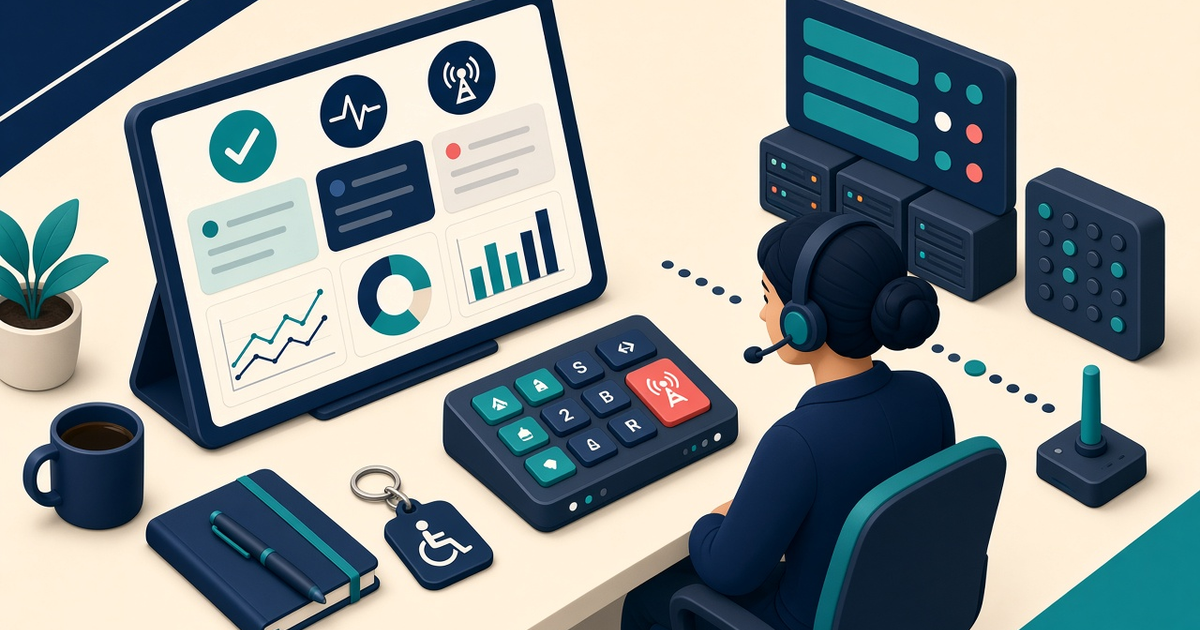
What operators actually see
If the night operator cannot tell last-seen from battery at arm’s length, you do not have observability. You have a hunt.
Core ideas
Treat the handset UI as a control surface, not a leftover consumer launcher. Display brightness stays high enough on the night shelf. System font scale should not clip status. Nicknames in the panel match tape on the chassis. Pairing QR is large enough to scan without a second person holding a flashlight.
OEM battery exemptions remain a reliability gate — see background restrictions by OEM. Pretty status icons do not help a Doze-killed worker.
UX checklist table
| Surface | Operator need | Fail if |
|---|---|---|
| Last-seen | Readable in two seconds | Buried three menus deep |
| Battery + charge | Visible without unlocking puzzles | Always-on display off, dark shelf |
| Device nickname | Matches physical label | “Phone 2” vs “OTP-east” |
| Pairing QR | High contrast, large | Glare, tiny code, clock skew |
| SIM slot | Which tray sends | Unlabeled dual-SIM |
| Queue | Depth without a laptop | Only visible in a backend graph |
Design for gloves and night shift
Tap targets should survive a thumb and a cheap stylus. Avoid gesture-only kill paths that swipe the gateway out of Recents. Lock the app in Recents as part of OEM setup. Document the exact screenshots for each frozen brand so support is not describing “the little battery icon” over the phone.
Tablets with SIMs can be easier to read; tablets without cellular cannot send. Do not “upgrade UX” by buying a Wi-Fi iPad.
Implementation
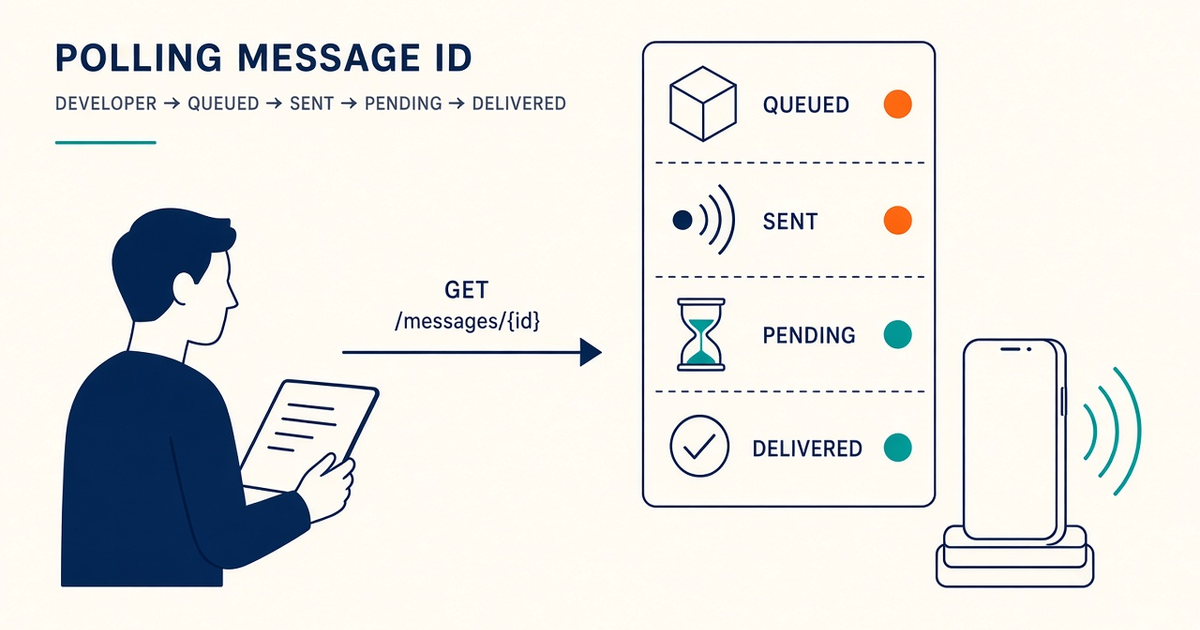
Train L1 with the radio-check card from support-staff training. Persist message ids for tickets — operators should paste an id, not a screenshot of an OTP. Confirm live fields in SMS API documentation.
Install only from downloads. Pair via setup.
Failure modes
Tiny type after an OEM “easy mode” reset. Work profile isolating SMS. Two identical phones swapped on the shelf. Brightness auto-dim at 02:00 so nobody notices last-seen. Pairing QR that looks grey-on-grey on a cheap panel.
Security
A phone that is always unlocked for “easier ops” is a theft target. Prefer a lock screen that still shows charging and a coarse last-seen, or a dedicated kiosk-ish setup you actually test. Redact OTP bodies in logs. Rotate keys after any photo of a pairing QR hits chat.
Operations
Physical labels, spare charger, spare device. After APK updates, walk the operator path once: unlock, last-seen, canary. Accessibility is a release gate, not a polish sprint.
Checklist
- Chassis tape matches panel nickname.
- Last-seen / battery / queue readable at arm’s length.
- Font scale does not clip status.
- QR contrast proven in the real lighting.
- Recents lock + OEM exemption.
- Work profile not isolating SMS.
- Official APK only.
- Operator drill after every update.
- Spare labeled phone.
- Developer Center not confused with this UX spoke.
Next steps
Return to the app guide, then troubleshooting if status is green and SMS still fail.
Deep dive: production hardening
Photograph the shelf. New hires should match photos to nicknames. Color-code OTP vs promo devices. Dual-SIM trays get a second sticker.
Screen readers on a gateway phone are uncommon; still avoid status that exists only as color. Pair color with text.
Deep dive: scaling and failure modes
More devices means more identical bricks. Naming conventions scale; “John’s Samsung” does not. Health-aware routing should skip stale last-seen so a mislabeled phone does not eat OTP.
Deep dive: integration discipline
Operator UX does not replace DLR in your backend. The human reads last-seen; the app still stores message ids. Confirm schemas in Developer Center. You bring the Android phone and operator SMS credit.
Related product pages
Jump to the live product docs for this topic—not another long-form article.
- device and SMS volume pricingPlans and allowances
- Android SMS gateway product guideDefinition, product, and how to buy
- SMS API documentationLive endpoint reference
- download the Android gateway appGet the APK